The roosters get you first. They strut across 7th Avenue at noon like they own the place, descendants of birds that escaped cockfighting pits a century ago, and the city long ago gave up trying to remove them. They are protected now, technically, and they will hold up traffic on a Saturday afternoon while a Lyft driver waits and a bachelorette party takes pictures. This is the texture of Ybor City: a National Historic Landmark District that is also, somehow, the place where Tampa goes to get drunk on a Friday night.
Ybor sits about two miles northeast of downtown Tampa, and it does not feel like the rest of the city. The Spanish-tile rooflines, the wrought-iron balconies, the brick streets laid by Cuban and Sicilian and Spanish immigrants in the 1880s — none of that exists anywhere else in the metro. For most of the twentieth century, this was where hand-rolled cigars came from, where mutual aid societies built grand social clubs, and where a sandwich got invented that the rest of the country is still arguing about. Today it is a neighborhood doing two jobs at once, and the visitor's task is figuring out which one to show up for.
The lay of the land
The spine of Ybor is 7th Avenue — La Séptima, if you want to use the name locals still use — running roughly from 13th Street east to about 22nd Street. That ten-block stretch is the historic core, the brick-paved part with the streetcar tracks and the awnings and the buildings that show up on postcards. Nuestra Señora del Sagrado Corazón anchors the western edge, the cigar factory bones run north and south, and Centro Ybor sits roughly in the middle as the closest thing the district has to a town square.
The history compresses neatly: Vicente Martínez-Ybor moved his cigar operation here from Key West in 1885, brought thousands of workers with him, and within a generation Tampa was producing hundreds of millions of cigars a year. The Depression and the mechanization of cigar-making gutted the industry, and by the 1970s most of the neighborhood was boarded up. The revival started in the 1990s, leaned hard into nightlife, and has been recalibrating ever since.
The vibe today is genuinely split. Daytime Ybor is a walkable historic district with coffee, museums, and the kind of slow Saturday lunch that runs two hours. Nighttime Ybor, particularly Friday and Saturday after about 10 p.m., is a club strip — bass thumping through brick walls, lines down the sidewalk, the works. Neither version is wrong. Just know which one you signed up for.
What to do
The Ybor City Museum State Park, housed in an old bakery on 9th Avenue, is the single best 45-minute orientation to the district — small, cheap, and honest about both the immigrant labor history and the lectores who used to read novels and newspapers aloud to workers rolling cigars. The restored casita gardens behind it are worth the walk through.
The cigar factories themselves are mostly converted now — apartments, offices, retail — but the brick hulks are still legible from the street. Walk north of 7th between 14th and 19th Streets to see the scale of what this place used to do. A few working rollers still operate storefronts along 7th if you want to watch hands that know what they are doing.
The social club buildings are the under-celebrated piece of Ybor architecture. El Centro Español, the Italian Club, the Cuban Club — these were mutual aid societies that built ballrooms, theaters, and cantinas at a scale that does not make sense for the neighborhood's current population. Several still operate; the Cuban Club in particular is worth poking your head into if a daytime event is open.
The Ybor City State Farmers Market on Saturday mornings draws a different crowd than the nighttime one — a useful counterweight if your only image of the neighborhood is the bar strip.
Where to eat and drink
The Cuban sandwich argument — whether Tampa or Miami invented it — is settled here, at least locally, with a confidence you cannot reason with. The classic sit-down lunch happens on the western end of 7th Avenue, where the older Spanish and Cuban kitchens have been doing the same menu for the better part of a century. Expect ropa vieja, black beans, 1905 salad, and flan, and budget more time than you think you need.
The coffee and breakfast block runs along the cross-streets between 7th and Palm, where a handful of newer cafés have moved into old storefronts and pull a respectable cortadito. For mid-day, the Centro Ybor end skews more casual — tacos, sandwich shops, a couple of bakeries doing guava pastries that disappear by 2 p.m.
Nighttime drinking concentrates on 7th Avenue between 15th and 17th Streets, and it is genuinely loud — multi-level clubs, hookah lounges, a few rooftops. The better cocktail bars have drifted one block north or south onto the side streets, where the volume drops and the bartenders can hear you order.
How to get there
The TECO Line Streetcar runs free and connects Ybor to downtown Tampa and the Channel District, which is the right move on any weekend night when parking is a fight. It runs until around 1 a.m. on Fridays and Saturdays. From downtown it is about a fifteen-minute ride.
If you drive, the city-run garages on Centennial Park and at Centro Ybor are the sane choice — flat-rate, well-lit, and avoid the surge pricing the surface lots run on event nights. Street parking on 7th is metered and unforgiving about it. Ride-share works fine, but the pickup zones shift on weekend nights when the city closes parts of 7th to cars; check the app before you walk to where you think the car is.
When to go
Saturday around 11 a.m. to 4 p.m. is the sweet spot for first-time visitors — the farmers market is open, the museums are quiet, the restaurants are doing real service, and the bar crowd has not arrived yet. Sunday is sleepier and a fair amount of the neighborhood is closed, which some people prefer.
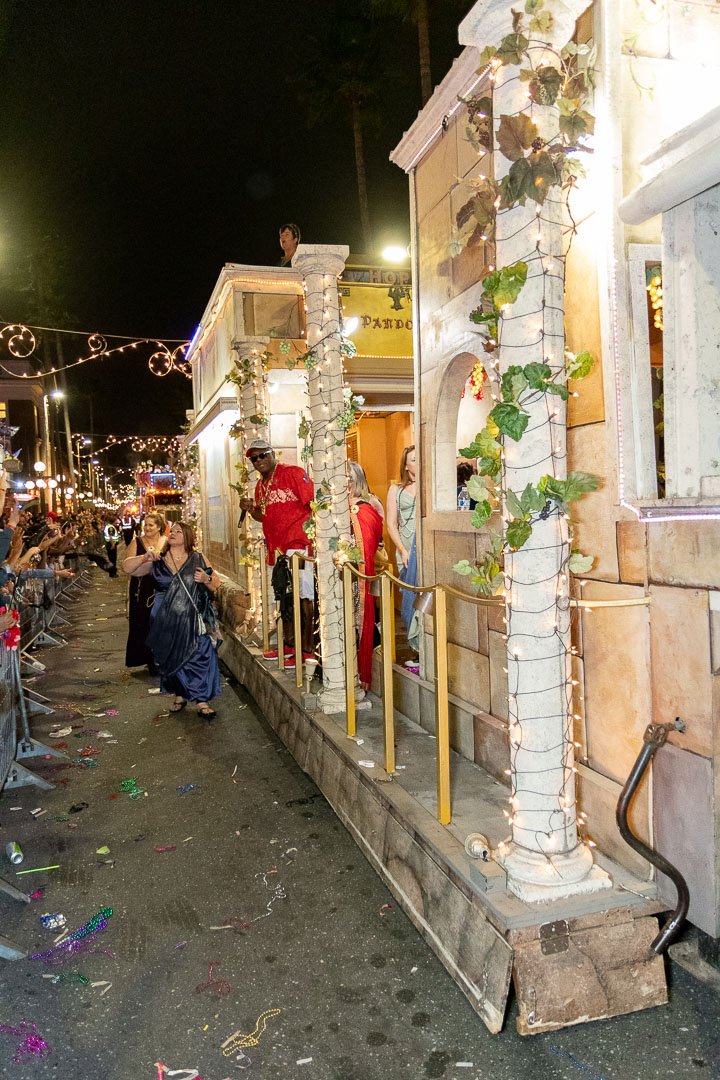
The first Friday of most months brings a gallery walk and art stroll that draws a calmer crowd than the usual weekend nightlife. Gasparilla-related events in late January and the Guavaween celebrations in late October are the two biggest crowd peaks; lovely if that is what you came for, miserable if it is not. Avoid late Friday and Saturday nights unless the club scene is the point of the trip — the strip gets genuinely packed and the line for a slice of pizza at 1:30 a.m. is not a story you need.
If it's your first time
Park at Centennial Park, walk south to 7th Avenue, and head west — museum first, then a long lunch at the old guard end of the strip, then loop back east along 8th Avenue to see the casitas and the social club buildings on the quieter side. Two hours, one rooster sighting minimum, and you will understand the neighborhood better than most people who only come at night.