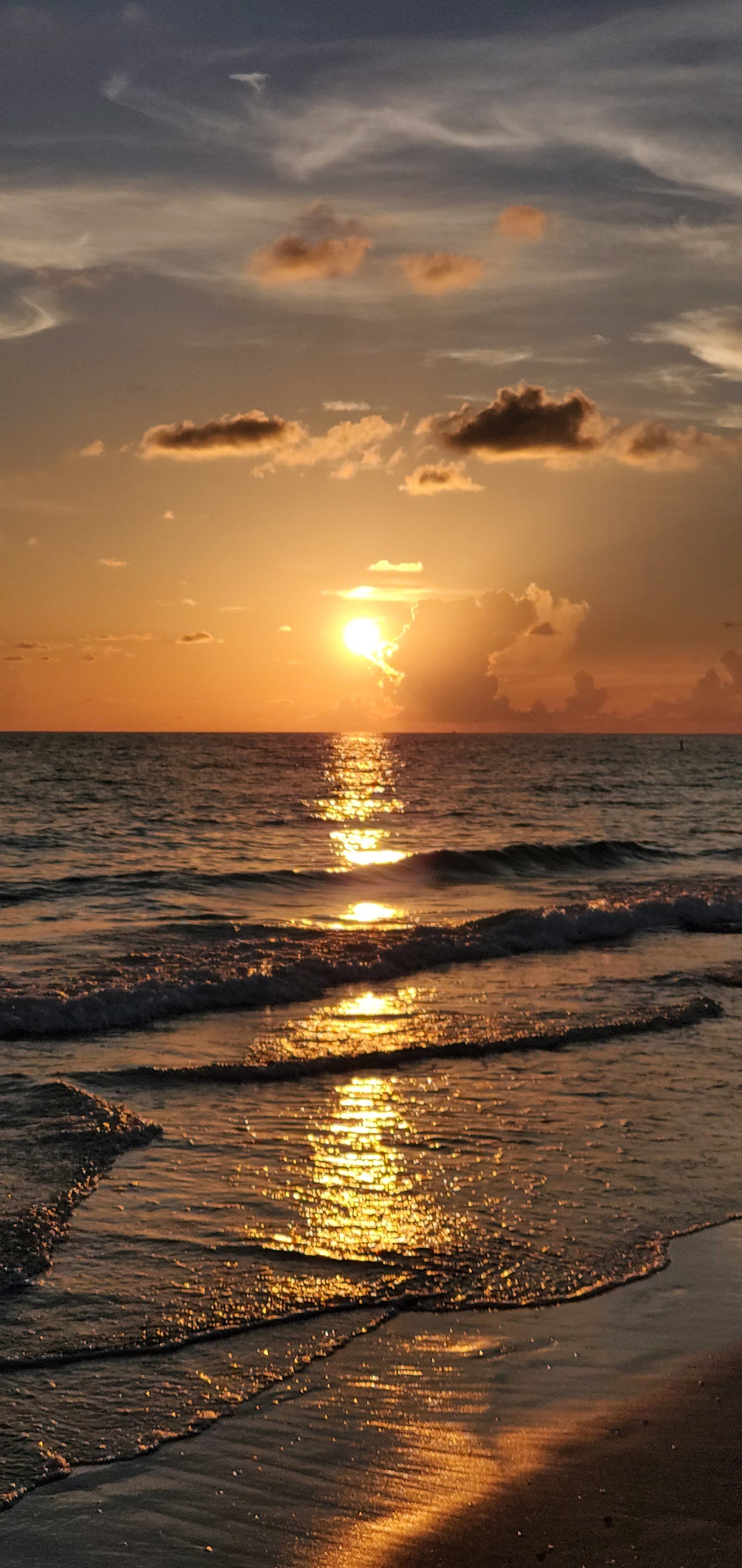
The Florida tourism board has spent decades pointing visitors at roughly six places. Miami Beach, Clearwater, Destin, Key West, Daytona, and whichever stretch of the 30A corridor is trending on Instagram that quarter. The result is predictable: in March, a two-bedroom rental in Seaside costs more than a mortgage payment, and the line at the Clearwater public restroom rivals airport security. Meanwhile, there are roughly 1,350 miles of Florida coastline, and a meaningful percentage of it is staffed by exactly one part-time lifeguard and a guy selling shrimp out of a cooler.
The towns below are not secrets. Locals know them, snowbirds know them, anyone who has driven a Florida state road for more than twenty minutes knows them. They are simply the places that didn't get the marketing budget. Each is within roughly two hours of a major airport, each has a working downtown rather than a strip of timeshare billboards, and each has a beach that justifies the drive. We've left out the towns that have crossed the tipping point in the last three years, the ones where the new development now outnumbers the old cracker houses, and the ones where the only restaurant is a chain.
What follows is geographic: a Panhandle pick, a few on the Gulf, a couple on the Atlantic, and one in the Keys that still feels like the Keys. Use it as a starting point, not a checklist.
Port St. Joe (Panhandle)
Two hours east of Pensacola International and about ninety minutes from Tallahassee, Port St. Joe sits on the eastern lip of St. Joseph Bay, sheltered from the open Gulf by the long thin arm of the St. Joseph Peninsula. The town took a structural hit from Hurricane Michael in 2018 and the recovery has been slow, which is part of why it still feels like itself: a working bay town with a short main street, a marina that smells like diesel and bait, and a handful of restaurants where the catch comes off boats you can see from the dining room.
The beach to aim for is the state park out on the peninsula. Sugar-white quartz sand, water that runs from clear to the kind of pale green you associate with the Caribbean, and dunes high enough to give you wind relief. The one thing to do is rent a kayak and paddle the bay side at dusk. Scallop season runs roughly mid-August through mid-September, and if you've never snorkeled for your own dinner, this is the place to learn.
Cedar Key (Gulf, Big Bend)
About ninety minutes southwest of Gainesville Regional and a bit over two hours from Tampa, Cedar Key is the closest thing Florida has to a New England fishing village that someone dragged a thousand miles south and dusted with palmettos. A handful of streets, tin roofs, stilt houses out over the water, and a clam aquaculture industry that produces something like a sizable share of the country's farmed clams.
The beach situation is honest: this is not a wide expanse of sand. It's a small public beach in town and a series of barrier islands you reach by boat. Manage your expectations and you'll be fine. The town's pleasures are different. Eat clams in every form anyone will sell them to you. Walk the historical district and look at the porches. The one thing to do is take a boat shuttle out to Atsena Otie Key, the original site of the town before an 1896 hurricane convinced everyone to relocate, and walk the trail through the old cemetery.
Boca Grande (Gulf, Southwest)
Boca Grande occupies most of Gasparilla Island, an hour and change south of Punta Gorda Airport and about two hours from either Tampa or Fort Myers (RSW). It is unapologetically genteel. Old Florida money, golf carts as the primary mode of transport, a banyan-lined main street, and a historic lighthouse at the southern tip. It's not undiscovered so much as deliberately under-marketed by the people who already live there.
The Gulf beaches are wide, the sand is fine and pale, and the shelling is legitimately good after a winter storm. There are no high-rises because the island won't let them happen. Eat at the places near the harbor and accept that everything will be more expensive than it should be. The one thing to do is the tarpon. From roughly April through July, Boca Grande Pass produces some of the heaviest tarpon fishing on the planet. Even if you don't fish, hire a guide for a half-day trip and watch a hundred-pound silver fish go airborne next to the boat.
Apalachicola (Panhandle, Forgotten Coast)
Two and a half hours from either Pensacola or Tallahassee, Apalachicola earns its inclusion despite the drive. The town itself is inland on the river, a former cotton port turned oyster town turned the closest thing the Forgotten Coast has to a cultural capital. Brick warehouses, Greek Revival houses, a working shrimp fleet, and a downtown small enough to walk in fifteen minutes.
For beach, you cross the bridge to St. George Island, which has a state park on its east end that consistently ranks near the top of any honest list of American beaches. Wide, undeveloped, low-rise, with sea oats and the kind of quiet that makes you realize how loud most beaches are. Eat oysters in town — the local fishery has had a hard decade and is slowly rebuilding, and the appellation matters. The one thing to do is rent a bike, ride the length of St. George, and end at the lighthouse on the east end.
New Smyrna Beach (Atlantic, Central)
An hour from Orlando International and twenty minutes from Daytona, New Smyrna gets dismissed by visitors who think it's just Daytona Lite. It isn't. The old downtown along Canal Street has been quietly building a restaurant and gallery scene for a decade, the surf is the most reliable on the Florida east coast, and the beach is wide enough to drive on in places — a quirk that horrifies some visitors and delights others.
The water tends to be greener and warmer than the Atlantic farther north. The town has an honest claim to the title of shark bite capital of the world, which sounds alarming and is, in practice, mostly a function of bull sharks chasing baitfish through a heavily-surfed inlet. The bites are almost all minor. Eat on Flagler Avenue or Canal Street depending on whether you want flip-flops or a proper dinner. The one thing to do is take a surf lesson at the south end, near the inlet jetty, where the waves are smallest and the instructors are patient.
Vero Beach (Atlantic, Treasure Coast)
An hour south of Melbourne Orlando International or about an hour and forty-five north of Palm Beach International, Vero is the buffer zone between the high-rise Atlantic of Palm Beach County and the bird-sanctuary stillness of the Treasure Coast. The town is split: a mainland half that runs Florida-suburban, and the barrier island half — Orchid, Riomar, the Central Beach district — that runs leafy, low, and quietly wealthy in a way that doesn't announce itself.
The beaches are uncrowded by Atlantic standards, the dune line is intact, and sea turtle nesting from May through October is among the densest in the hemisphere. Restaurants on the island skew small and seasonal. The one thing to do is the McKee Botanical Garden on the mainland side, an 18-acre subtropical jungle hammock that the Garden Club rescued from being bulldozed for condos in the late 1990s. Pair it with a sunrise on the beach and you've used the day well.
Islamorada (Florida Keys)
Ninety minutes from Miami International if traffic on US-1 is reasonable, two hours if it isn't. Islamorada is not undiscovered — nothing in the Keys is — but it remains the village in the middle that most visitors blow past on their way to Key West, and that's an error. It is the sport-fishing capital of the chain, the bridges and channels are some of the most photogenic in the state, and the pace is closer to old-Keys than anything south of it.
The beach caveat: the Keys don't really have beaches in the Panhandle sense. The reef sits offshore, which means no wave action to deposit sand. What you get instead is shallow, glass-flat water you wade into from a hard-bottom shore, and a sunset over the bay side that does most of the heavy lifting. Eat fish that was swimming six hours ago. The one thing to do is a half-day backcountry charter — flats fishing for bonefish, tarpon, or permit, depending on the season. Even if you don't catch anything, you'll see parts of the Everglades from the water that no road will ever take you to.
When to go
The window is narrower than the tourism brochures admit. October through early December is the sweet spot statewide: water still warm, humidity dropped, hurricane risk fading, snowbirds not yet arrived in force. March and April are good but crowded, especially during spring break weeks. Avoid July and August unless you genuinely enjoy stepping outside into a wet wool blanket, and avoid late August through September entirely if you can't move your trip on short notice — peak hurricane season is real, and a named storm 600 miles offshore will still close beaches and ground flights. A note on etiquette: on any beach with active sea turtle nesting, which is most of the Atlantic coast and much of the Gulf from roughly May through October, fill in any holes you dig, take your beach chairs in at night, and turn off the flashlight on the way back to the car. Hatchlings orient by moonlight, and a single phone screen on the dune line will send a clutch the wrong way.