Pizza in Florida has always been a transplant's art. The state's pizzaiolos came from Brooklyn, from Naples by way of Buenos Aires, from Detroit, from Havana, and the result is a peninsula where you can eat a wood-fired Margherita in a converted Ybor cigar factory at lunch and a square Sicilian with sofrito on top in a Hialeah strip mall by dinner. The styles don't blend so much as coexist, each clustering around the cities that imported them.
What follows is a regional read on where Florida pizza actually lives in 2026 — Neapolitan in Tampa Bay, New York in Jacksonville and the Treasure Coast, Detroit-style spreading out of Orlando, and the genuinely Floridian pies that nobody else makes. This is not a ranking pulled from aggregated reviews. It's a tour of the rooms doing distinct work, with notes on what makes each regional scene tick and why the Tampa-versus-Miami argument over the best pie in the state refuses to die.
Tampa Bay: the Neapolitan capital
If Florida has a pizza identity, Tampa Bay owns it. The city's claim rests on a cluster of VPN-certified Neapolitan rooms that take dough fermentation and 900-degree ovens seriously, and the scene's elder statesman is Bavaro's Pizza Napoletana, with its downtown and Carrollwood locations turning out blistered, leopard-spotted pies under three minutes. The crust is wet in the center by design — a Neapolitan trait that confuses first-timers and converts everyone else.
A few miles south, Toby's Pizza in Seminole Heights operates out of a converted bungalow and runs a tighter, more rustic program — fewer pies on the menu, a dough that leans toward sourdough tang, and seasonal specials that lean on Florida produce when it's worth using. Toby's is where Tampa locals send out-of-town pizza nerds, partly because the room sits about twelve people and the wait teaches you something about commitment.
Orlando: where Detroit-style took root
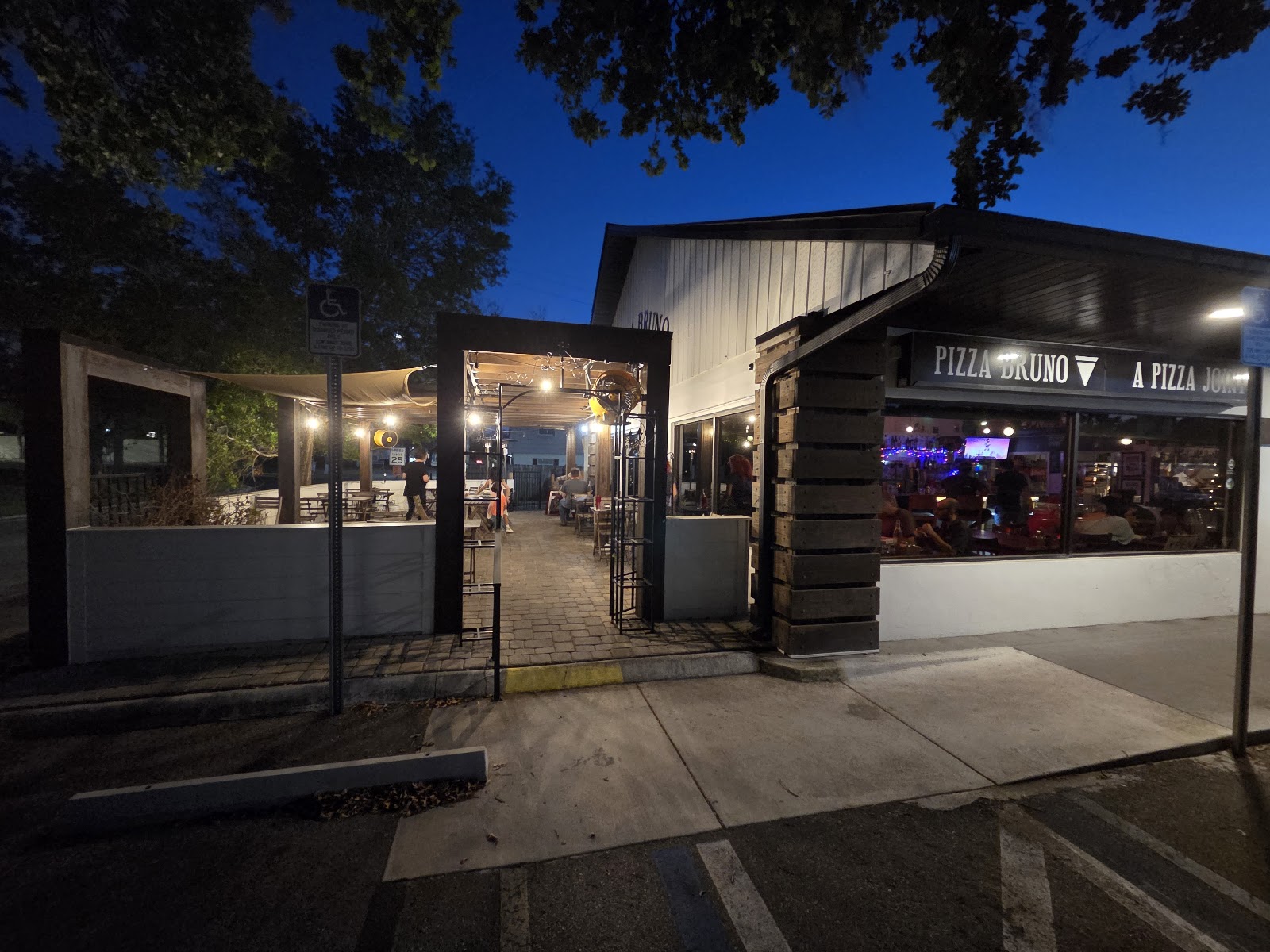
Orlando is the surprise. The theme park economy means the city imports both customers and chefs from everywhere, and the most interesting kitchen in town for pizza is Pizza Bruno in the Hourglass District. Bruno Zacchini built the place around a Neapolitan menu before quietly adding a Detroit-style square that's now what the line waits for: aged dough pressed into blue steel pans, cheese taken to the edge for that lacquered frico crust, sauce ladled on top after baking in the Detroit tradition. The Neapolitan pies are still there and still excellent, but the Detroit pan is what changed Orlando's pizza conversation.
The Detroit-style spread has continued. You'll now find rectangular pan pies on menus from Winter Park to Lake Mary, and the format has begun showing up at Miami pop-ups and Tampa breweries — which is how regional styles travel in Florida: a chef visits, eats, comes home, and tries it in their own kitchen.
Miami: Neapolitan with a Brooklyn accent
Miami's pizza scene answers to two masters. The fine-dining version arrived with Lucali Miami Beach, the Sunset Harbour outpost of Mark Iacono's Carroll Gardens original, which carried over the thin, hand-stretched, basil-strewn pies that built the Brooklyn reputation. Lucali is the dressy answer to the question of where to eat pizza in Miami — reservations required, no slices, a wine list that's actually thought through.
For the counter-argument, Miami's Italian-American slice shops have been quietly improving for years, with rooms in Wynwood and Coral Gables turning out coal-fired and wood-fired pies that owe more to Patsy's and Totonno's than to Naples. The Tampa-versus-Miami pizza debate basically comes down to this: Tampa argues for Naples-faithful technique, and Miami argues that the best pizza in Florida is a Brooklyn pie eaten three blocks from the water. Both sides are right and neither will admit it.
Jacksonville and the First Coast: New York-style holds the line
Drive north and the style shifts. Jacksonville is a New York pizza town, which makes sense given the I-95 demographic pipeline that's been running for fifty years. Carmine's Pie House in Five Points is the standard — a foldable slice with a proper crisp-to-chew ratio, sauce that tastes like tomatoes rather than sugar, and a pepperoni cup that crisps the right way. The room is loud, the slices are cash-and-carry, and the pie holds together at the tip, which is the only test that matters for this style.
South of Jacksonville, in St. Augustine and Daytona, the New York style continues with shops that have been there long enough to be part of the local civic identity. The dough tends to be wetter and the ovens older than what you'd find in a modern Brooklyn opening, but that's the point — these are second- and third-generation rooms that learned the craft when it was the only pizza most Floridians knew.
Central Florida: NY Pizza Department and the slice belt
Between the coasts, the dominant format is the by-the-slice counter. NY Pizza Department, which has multiple locations across the I-4 corridor, has become the de facto standard for what a Floridian thinks of as a "good slice" — thin, reheated to order, foldable, recognizable. It's not boundary-pushing pizza, but it's the volume player, and the consistency across the region's locations is what keeps it on most short lists for casual nights.
The slice belt extends through Lakeland, Polk County, and the Space Coast, and the better counters distinguish themselves on the same three variables: dough age, sauce acidity, and whether the cheese browns or just melts. The differences are small but real, and locals tend to be quietly loyal to the shop where they went to high school.
The Florida-style pies: Cuban, Gulf, and the rest
The most genuinely Floridian pizza isn't a separate style so much as a topping vocabulary. In Miami and Tampa, the influence of Cuban and Caribbean kitchens has produced pies that you won't find anywhere else in the country — sofrito-based sauces, lechon as a topping, plantain on dessert flatbreads. La Camaronera in Little Havana isn't a pizzeria, but its fritters and seafood dishes have inspired the shrimp-and-tomato flatbreads that several Miami kitchens now run as specials.
Along the Gulf Coast, you'll find Gulf-shrimp flatbreads and grouper-topped pies on menus from Cedar Key down to Naples. These are usually one-off specials rather than regular menu items, and they live or die on whether the kitchen treats the seafood with respect — overcook the shrimp and you've got rubber on bread; get it right and you've got something that tastes like the state.
The other Florida wrinkle worth mentioning is the chain question. Mellow Mushroom didn't originate in Florida — it started in Atlanta in 1974 — but the chain has so many Florida locations and such a long history in college towns from Gainesville to Tallahassee that it functions, for many Floridians, as the pizza of their twenties. The pies are stoner-friendly, the crust is brushed with butter and parmesan, and the menu treats toppings as a maximalist exercise. It's not what a Tampa Neapolitan partisan would call pizza, but it's a real part of the state's pizza memory.
Where the regional styles meet
What makes the Florida pizza map interesting is that none of the regional scenes are sealed off. A Tampa Neapolitan room will run a Detroit square as a weekend special. A Miami slice shop will put a Gulf-shrimp pie on the menu for a month. A Jacksonville pizzeria will quietly add a Margherita made with imported buffalo mozzarella and not advertise it. The boundaries are real but porous, and the best operators in each city are watching what's happening in the others.
If you're trying to eat the state's pizza in a single trip, the logical loop is Tampa to Orlando to Miami to Jacksonville and back, which gives you Neapolitan, Detroit, Brooklyn-via-Miami, and New York-style in roughly that order. It's a lot of pizza for one trip — but it's also a more honest read on what Florida actually eats than any best-of list that just ranks the same five rooms in Miami.
When to go
Pizza is a year-round proposition in Florida, but the better rooms — particularly the small Neapolitan kitchens in Tampa and the slice counters in Miami Beach — get crushed during high season from December through March and during spring break weeks in March. Aim for late April through early June or October and November for shorter waits and cooler patio nights. Avoid the week between Christmas and New Year unless you're prepared to wait two hours for a wood-fired pie. A note on etiquette: the Neapolitan rooms in Tampa Bay are small and unapologetically slow by design, since the oven decides the pace, not the dining room. Don't ask for it well-done, don't ask them to cut it for you before serving, and don't be surprised when the center of the pie is soft enough to require a knife and fork. That's not a flaw — it's the style.