The first time you see a 30-foot king cake float roll past Mel's Drive-In with a Grammy winner playing two hundred yards away, you understand what Universal Orlando figured out decades before its competitors: that a theme park doesn't have to fight for your evening if it just becomes the most interesting thing in town. Mardi Gras has been the resort's quietest power move for years — a festival overlay that turns a $130 ticket into something closer to a value proposition, particularly for Floridians with annual passes who treat it as a recurring Saturday-night option from February onward.
The 2027 edition is the one to actually plan around. Universal has stretched the run to roughly two months — the longest in the event's history — which means the early February nights are nearly empty, the late-March nights are saturated, and there's a strategic sweet spot in between that regulars guard like a fishing hole. The concert lineup, traditionally announced in waves through January, has been trending harder toward genuine arena headliners rather than nostalgia-circuit acts, and the parade itself remains the closest thing to actual New Orleans craftsmanship you'll find east of the Mississippi.
What it is
Universal Mardi Gras started in the mid-1990s as a weekend add-on and grew, slowly and then suddenly, into a two-month overlay that touches food, parade, and concert programming inside Universal Studios Florida. The floats are commissioned from Kern Studios in New Orleans — the same shop that builds for the actual Mardi Gras — which is the detail that separates this from a corporate cosplay of a festival. They're hand-sculpted, repainted yearly, and thrown from by costumed performers who toss the same beads you'd catch on Bourbon Street.
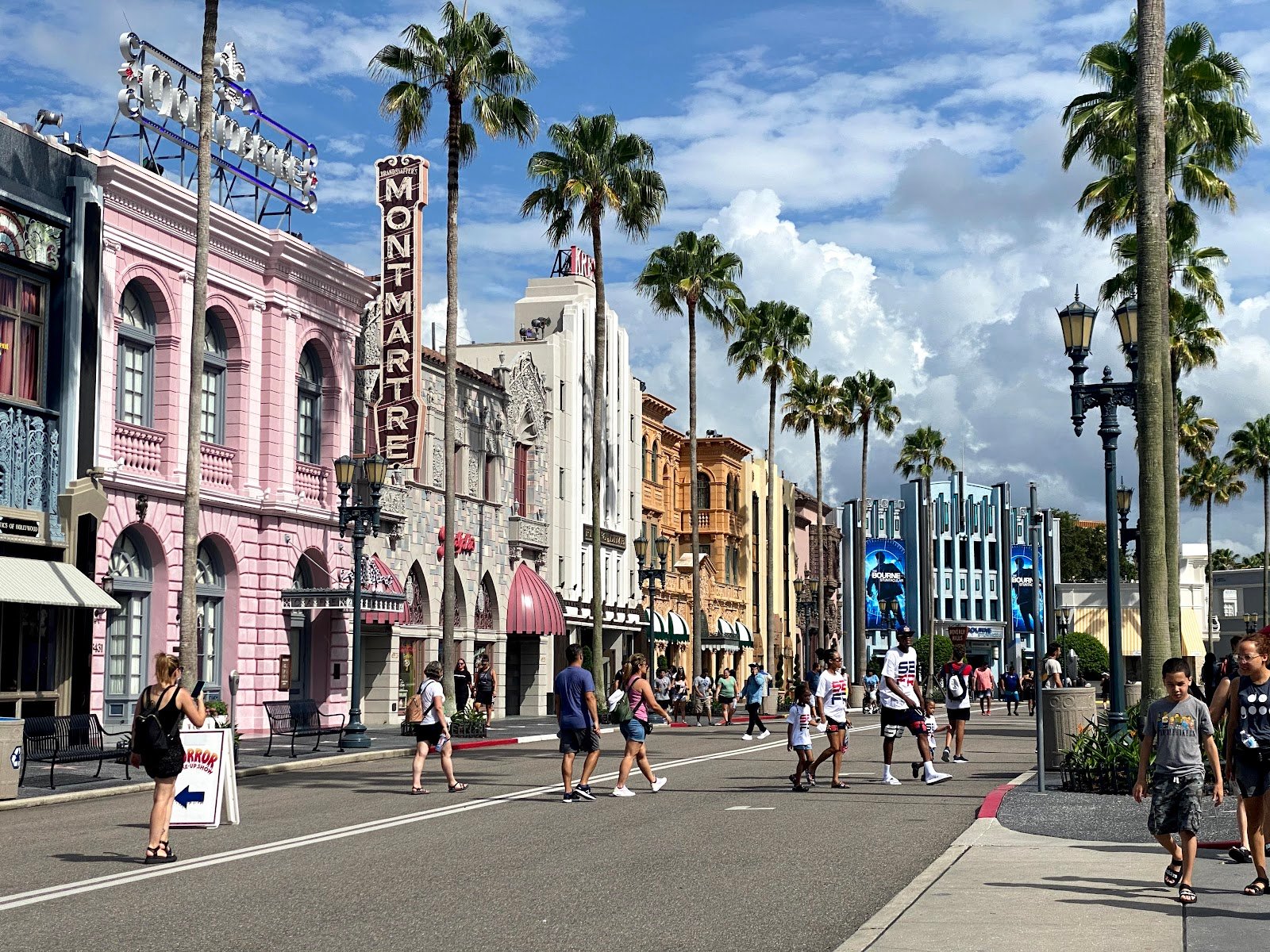
The format is consistent: park opens normally, parade rolls in the early evening down Hollywood Boulevard and Plaza of the Stars, the concert kicks off at the Music Plaza stage shortly after, and a French Quarter courtyard near the San Francisco area runs Cajun food booths all day. Crowds skew local on weeknights and tourist-heavy on Saturdays, with the concert acts dictating the spread. The hype-to-substance ratio is unusually fair — the parade is genuinely good, the food is better than it has any right to be, and the concerts are free with park admission, which is the cleanest deal in Orlando entertainment.
The honest caveat: it's still a theme park. You're paying gate price, the beer is overpriced, and headliner nights mean two-hour pre-show camping on the concrete to get within a hundred yards of the stage.
When and where
The 2027 run is scheduled for early February through early April on select nights — exact opening and closing dates are typically confirmed by Universal in November or December [2027 dates TBD pending official announcement]. Expect Saturdays throughout the run, with weeknights added as the calendar progresses toward spring break.
Everything happens inside Universal Studios Florida — not Islands of Adventure, not Volcano Bay. The parade route loops through the front half of the park, and the concert anchors at Music Plaza in front of the Hollywood Rip Ride Rockit coaster. The festival footprint pushes traffic into International Drive, Sand Lake Road, and Major Boulevard, with the heaviest spillover hitting the Universal Boulevard corridor and the hotels along Turkey Lake Road.
Getting there
Self-parking at Universal runs around $30 and the garages fill predictably on concert Saturdays — aim to arrive before 4 p.m. or after 8. The preferred parking tier is rarely worth the upcharge unless you're leaving immediately after the show. Lyft and Uber have a dedicated pickup zone on the second level of the parking hub, which is faster than the taxi stand but slower than walking to a nearby hotel and ordering from there. The I-Ride Trolley serves I-Drive hotels and stops within walking distance of CityWalk, which is the move if you're staying near the Convention Center.
Where to eat
The festival's in-park Cajun booths handle dinner adequately, but the better play is eating before or after off-property. The Sand Lake Road "Restaurant Row" stretch, ten minutes south, has the strongest concentration of sit-down options near the resort. The Mills 50 district, fifteen minutes east, is where you go if you want something that doesn't feel adjacent to a tourist corridor — it's Orlando's actual dining neighborhood. For something quicker, the Pointe Orlando complex on I-Drive itself works for a pre-park dinner without committing to a drive.
What locals actually do
Pass holders treat the early February nights as the real event. The parade is identical, the food booths are fully stocked, the headliners on those nights tend to be the sleeper bookings, and you can stand ten feet from the floor barricade without arriving at 4 p.m. Weeknights in February are similar — Wednesdays especially.
The other local move is skipping the concert entirely on big-headliner Saturdays. Watch the parade, eat through the booths, and ride attractions while the rest of the park is funneled toward Music Plaza. Wait times on the back half of the park drop into single digits during the show. Bring a small bag of your own beads from a previous year — float performers throw harder to people already wearing them.
If it's your first time
Wear closed-toe shoes you'd walk five miles in, bring a light layer for after sundown when the lake breeze cuts through the park, and arrive by 5 p.m. on concert nights to get a usable spot. Stake out the parade on Hollywood Boulevard near Mel's, not at the Plaza of the Stars where everyone else is.