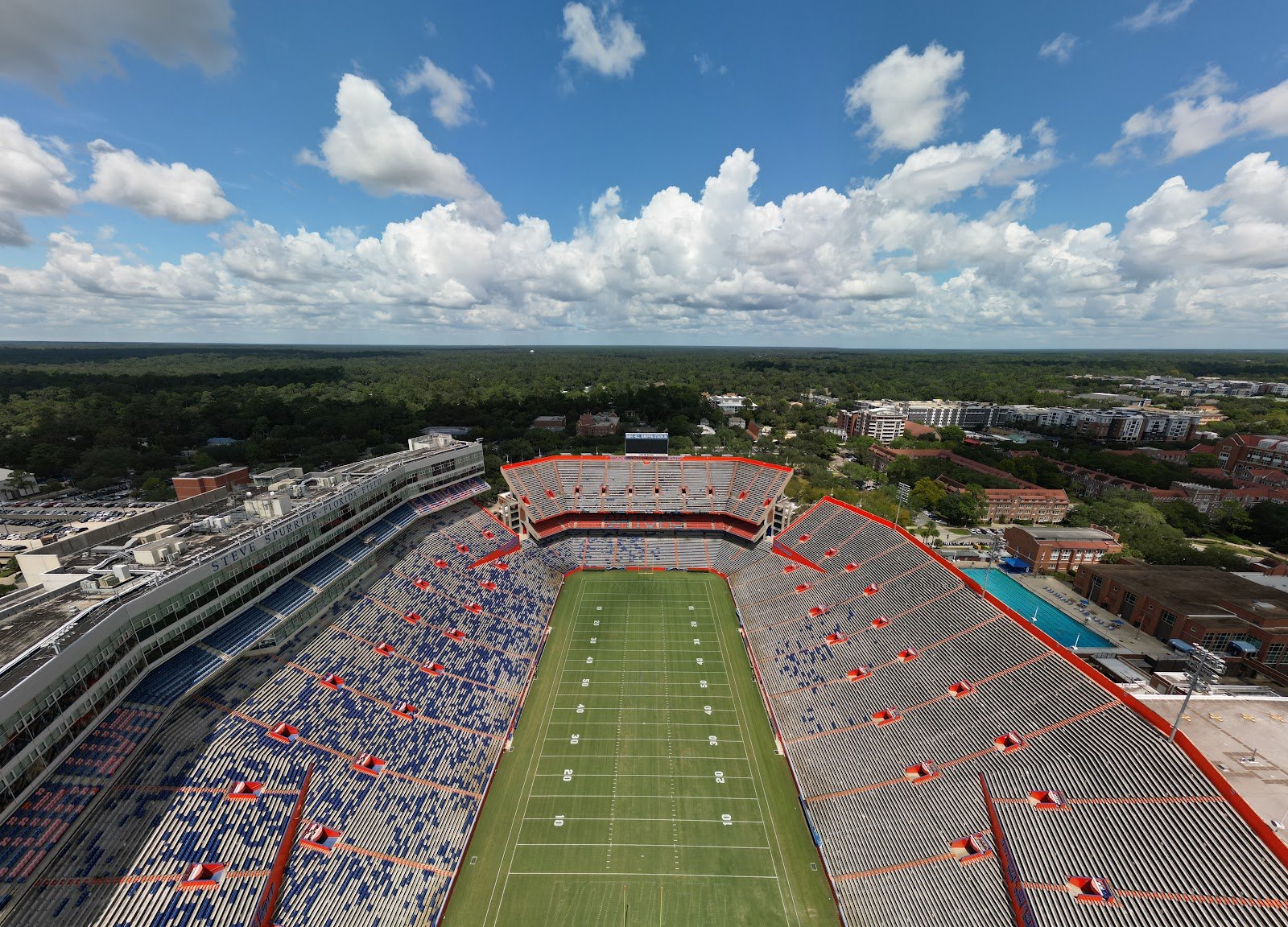
Ben Hill Griffin Stadium holds 88,548 people and was designed, partly by accident and partly by intention, to trap crowd noise inside a bowl. When the visiting team lines up under center on third down and the upper deck is full, the snap count becomes a negotiation. Steve Spurrier coined the nickname in the early nineties — he said opponents hated playing in Gainesville because it was hot, it was loud, and it was a swamp. All three things remain true. The stadium sits in a low-lying part of north-central Florida where the air has weight in September and the concrete radiates heat long after the sun drops.
Getting the most out of a Gator game day requires a level of planning that most visitors skip. The parking situation punishes anyone operating on stadium-arrival logic. The tailgate culture runs on an earlier clock than you expect. The Midtown bar scene has layers beyond the obvious strip, and the post-game food options split cleanly between the crowd that wants to eat fast and the crowd that understands that waiting is part of the meal.
What follows is a full-arc game-day guide covering parking, tailgate zones, the pregame bar circuit, post-game food, and an honest account of what makes The Swamp specifically different from the forty other stadiums that claim a top-five atmosphere. The SEO versions of this guide tell you where the stadium is. This one tells you what to actually do when you get there.
Lot 43: Where the RV Tailgaters Live
The large grass lot on the southwest perimeter of campus — known to regulars as Lot 43 — is where the multi-day tailgate operation runs. RV permits sell out before the full season schedule is published. By Friday evening before a Saturday game, the lot has the density and social texture of a small temporary city. Walking through it on game-day morning, past generators and satellite dishes and grills the size of small vehicles, is one of the more specifically Floridian experiences in American college football. If you want to camp here, plan the permit purchase in August at the latest.
Reitz Union Parking
The J. Wayne Reitz Union sits at the geographic center of campus, and its surrounding parking puts you close enough to walk to the stadium, to Midtown, and to the Gator Walk corridor without a shuttle. For marquee games, expect it to be full three hours before kickoff. For mid-season conference games against non-rival opponents, two hours may work, but the margin for error is thin. The Union itself is worth knowing as a landmark — it anchors the campus and functions as the navigational center of game-day foot traffic.
Remote Lots and the Shuttle Option
For anyone not willing to circle for on-campus parking, the remote lot and shuttle system is the practical answer. Butler Plaza, the large shopping center west of campus on Archer Road, operates game-day shuttle service that runs continuously before and after games. The ride is short. The drop-off puts you in range of Midtown with time to spare. If you are driving in from out of town and the on-campus situation looks gridlocked — which it will, on a noon kickoff — this is the move that saves the afternoon.
Murphree and Fraternity Row
The fraternity houses clustered around the Murphree area run organized tailgate operations from early morning, with setups that include generators, sound systems, and catering that would not embarrass a mid-sized outdoor event. If you know someone inside a house, this is the best tailgate access in Gainesville. If you don't, the street-level energy is still worth walking through — it's the densest concentration of game-day activity on campus before the gates open. The scene peaks roughly two to two-and-a-half hours before kickoff and empties fast as the walk to the stadium begins.
Gator Walk
Two hours before kickoff, the team buses arrive and the players walk through a fan corridor along Stadium Road from the drop-off point to the locker room entrance. The crowd packs in deep on both sides. This is a free, standing-room experience that requires only early arrival, and it functions as the actual emotional start of game day — the moment when the noise shifts from social to something with stakes. First-timers who arrive an hour before kickoff miss it entirely. That is the single most common timing mistake in Gainesville.
Salty Dog Saloon
The Salty Dog is the Midtown dive bar that fills up first and empties last. It is dark, it is loud, and the televisions cover every surface. The drinks are straightforward, the bartenders are efficient under pressure, and the crowd on a noon-kickoff Saturday morning is already at full energy by ten. It is not a place to have a conversation. It is a good place to understand what game-day Gainesville looks like at its most condensed.
The Grog House
The craft beer anchor in a stretch of bars that default to domestic tap handles. The Grog House carries a rotating selection that skews toward Florida-made breweries and stays current on what's worth ordering. The crowd runs slightly older, the volume is lower than the strip bars, and the food is substantive enough to serve as an actual pregame meal rather than an afterthought. Go here if you want to drink something worth paying attention to before the walk to the stadium.
Cantina
Cantina has a rooftop, which matters in October in ways it doesn't in September. The margaritas are competent, the view of Midtown foot traffic is good, and it sits in the right part of the strip to serve as a transition point between the early tailgate crowd and the walk to the stadium. Order food before the noon hour on a noon-kickoff day; the kitchen backs up reliably as the last pregame window closes.
The Boston Tea, the Chomp, and What Tourists Get Wrong
The Boston Tea is the sweet, strong mixed drink that functions as Gainesville's unofficial game-day cocktail — available at multiple Midtown bars, ordered in quantities that become apparent by the second quarter. The Gator Chomp, done correctly, requires both arms extended fully forward with hands opening and shutting in an alligator-jaw motion. Tourists tend to do it one-armed, which is immediately identifiable. What tourists get most consistently wrong, however, is pregame timing. If you plan to do Midtown bars before the game and also get to your seat before kickoff, you need to be on University Avenue three hours before the game starts. Archer Road and Stadium Road lock up predictably. The visitors who arrive to Midtown 90 minutes before kickoff and then expect to walk in for the opening drive are the ones standing in traffic, not the ones in their seats.
The Swamp: What Makes It Different
Most large stadiums are loud. Ben Hill Griffin Stadium is specifically engineered to concentrate and amplify crowd noise in ways that measurably affect opposing offenses. The bowl geometry, the steep seating angle, and the proximity of the upper deck to the field trap sound rather than dispersing it. The documented decibel records set here are not flukes — they are the result of a particular acoustic design interacting with a crowd that understands its role. Sit in the upper deck for a third-down stop against a ranked opponent and you will feel the structure move. It is one of the genuinely physical experiences available in American sports.
Satchel's Pizza
Satchel's is cash only, operates on its own hours, and has a back garden full of salvaged furniture, old school buses repurposed as dining rooms, and a general atmosphere that resists easy description. The pizzas are made carefully and the waits are real — longer after a home win, shorter after a loss, variable in ways that reward patience. Bring a group, bring cash, and plan to be there for the duration. This is the post-game option for people who understand that the best meal requires a wait.
Burger Bistro
For the portion of the post-game crowd that wants a burger and a beer without committing to the Satchel's timeline, Burger Bistro handles the volume well. The menu is focused, the execution is consistent across the rush, and the bar is fully stocked. It draws from the Gator crowd without becoming a sports bar in the pejorative sense — the noise level is controlled, the food is the point, and the kitchen keeps pace with post-game demand better than most options in the area.
When to Go
The best Gator game days run from late October through November, when the humidity drops and night games become something close to ideal — cool air, full stadium, lights coming up in the fourth quarter. September games are part of the season but they are played in an outdoor sauna; hydrate aggressively and pace your alcohol intake in ways that wouldn't occur to you in October. The rivalry games bring crowd dynamics that reward extreme early arrival and discourage lingering in the parking lots after the final whistle — the post-game traffic situation on those days is its own event. Inside the stadium, the culture is loud but not hostile; the expectation is that you participate, you know the cheers, and you give the Chomp with both arms. The etiquette note worth carrying in: respect the sightlines. The upper deck is steep enough that standing on your row when nobody around you is standing is noticed, and not positively.