By Thursday of race week, the Walmart on US-27 has run out of folding chairs, the AM band is bleeding flat-six engine notes from preseason testing, and the long shoulder of Highway 98 is lined with RVs that have been parked there since the previous Saturday. Sebring does not warm up gradually. It arrives like a weather system, and the small Highlands County city — population somewhere under 11,000 — absorbs a crowd many times that without much visible strain. The locals have been doing this since Eisenhower.
The 2027 running is the 75th anniversary edition, and that matters more than the round number suggests. Sebring is where IMSA's WeatherTech Championship season effectively begins in earnest after the Rolex 24, and the Hypercar/GTP era has finally produced the kind of multi-manufacturer grid the race was missing for two decades. Cadillac, Porsche, BMW, Acura, Lamborghini, and Ferrari all turn up with factory programs. If you've ever been curious about endurance racing and live within a day's drive, this is the year.
What it is
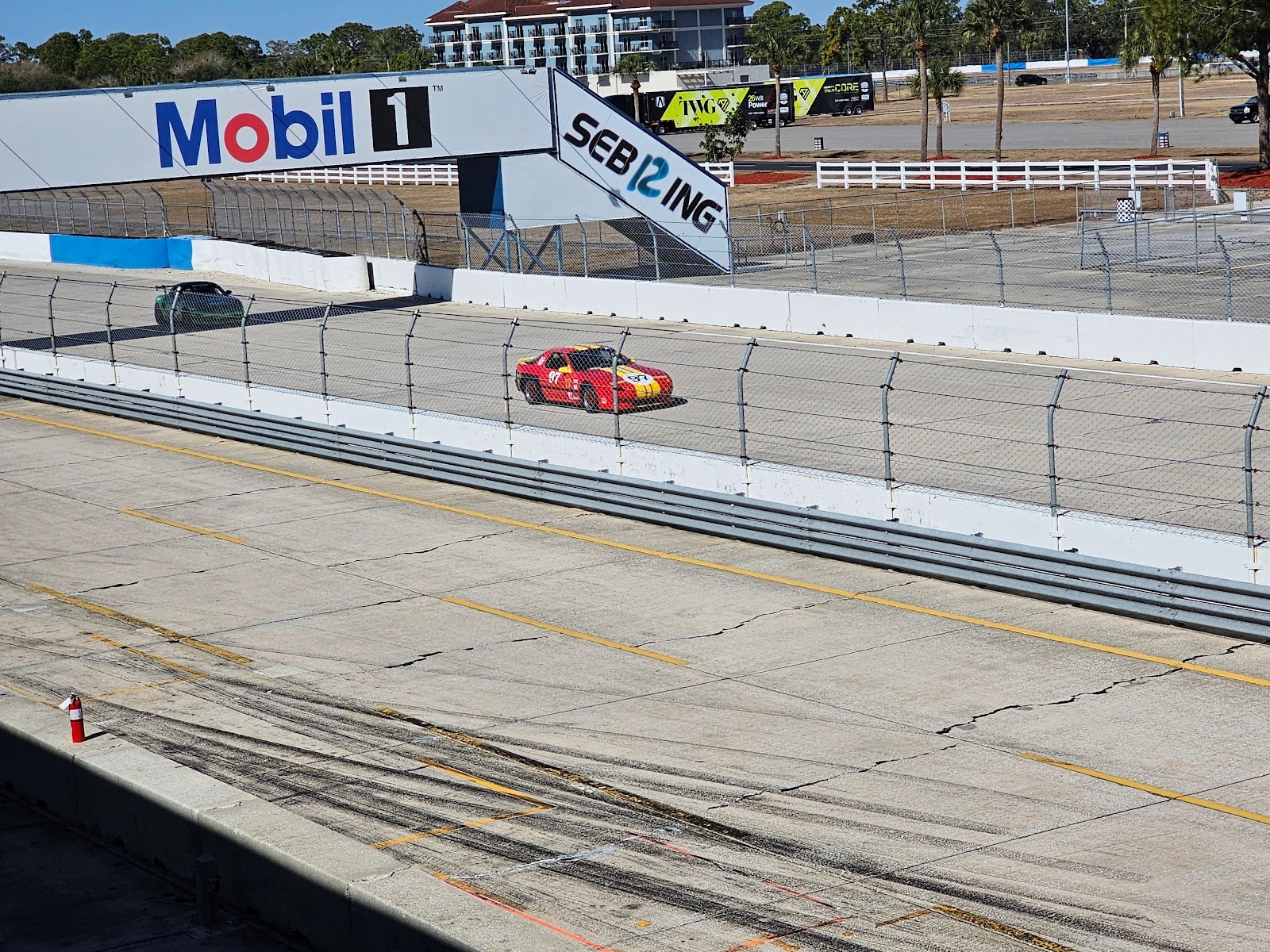
The Mobil 1 Twelve Hours of Sebring is the oldest endurance race in North America, first run in March 1952 on the perimeter roads of a decommissioned B-17 training base. The 3.74-mile circuit still uses some of that original concrete, which is why the surface is famously, almost comically, brutal — drivers describe it as twelve hours of being shaken apart on purpose. The race begins around 10 a.m. and runs into the Florida night, with the last three hours under lights and usually decisive.
The fanbase splits cleanly. There are the European-style sports car purists who track lap times on phones in the paddock, and there are the Green Park regulars who have been camping in the same infield spot since the Carter administration and may or may not watch the race itself. Both groups co-exist. Tickets are reasonable by motorsport standards — a general admission day pass costs less than a decent NFL nosebleed seat — but the real expense is camping, which sells out months in advance and has its own informal economy of resold spots.
Be clear-eyed about the hype: the racing is genuinely world-class, the access is better than any other major series in America, and the atmosphere is unlike anything else. The trade-off is dust, sunburn, queueing for portable toilets, and a roughly two-hour exit on Saturday night.
When and where
The 2027 edition runs on race day in mid-March [dates TBD], with the full Mobil 1 Sebring SuperSebring week of support races, IMSA practice, and the Michelin Pilot Challenge starting the preceding Wednesday. The venue is Sebring International Raceway, just east of downtown Sebring off Highway 98. The town itself — the historic Circle district, the strip along US-27, the lakefront on Lake Jackson — fills with race traffic from Thursday onward. Avon Park to the north and Lake Placid to the south absorb the overflow.
Getting there
Most attendees drive. From Tampa it's about 90 minutes; from Orlando, roughly two hours; from Miami, three and a half. On-site parking is included with most ticket types, but the dirt lots fill by late morning on race day — arrive before 9 a.m. or accept a long walk. Rideshare from the immediate area is unreliable on Saturday evening, with surge pricing that makes a $40 ride into a $180 one. The official designated rideshare zone is off Lakeview Drive, and it gets gridlocked. A better move: book a hotel in Avon Park or Lake Placid and drive in, or commit fully and camp.
Where to eat
Sebring is not a food town, and pretending otherwise sets you up for disappointment. The reliable strategies are three. The Circle, downtown's historic roundabout, has a cluster of independent cafes and one or two genuinely good lunch spots that locals defend. The US-27 corridor north toward Avon Park is where the workmanlike barbecue, Cuban, and family Italian places live — solid, unpretentious, fast enough to get you back to the track. For anything more ambitious, the Lake Jackson side has a few waterfront restaurants that are worth the short drive, especially for a non-race-day dinner. Race weekend itself, expect waits everywhere.
What locals actually do
Locals skip the gate rush entirely by walking in from the Hendricks Field side on the north perimeter, where the lines are minutes rather than an hour. They pack a cooler with their own beverages — the regulations allow it, and the on-site prices reward you for reading the rules. They watch the start from Turn 1 because the GTP cars sound best there into the braking zone, then migrate to Turn 17 for the last three hours, which is where the race is usually won and where the crowd thins after sunset. They also know that Green Park is theater more than spectating, that the infield Midway is a long walk in soft sand, and that the best free shower on Sunday morning is at the truck stop on US-27.
If it's your first time
Bring sunscreen, foam earplugs, a refillable water bottle, and shoes you do not care about — the dust is talcum-fine and stains. Arrive by 8:30 a.m. on race day, eat before you come, and plan to stay until at least 9 p.m. so you experience the final hours under lights, which is the entire point. Do not wear sandals.