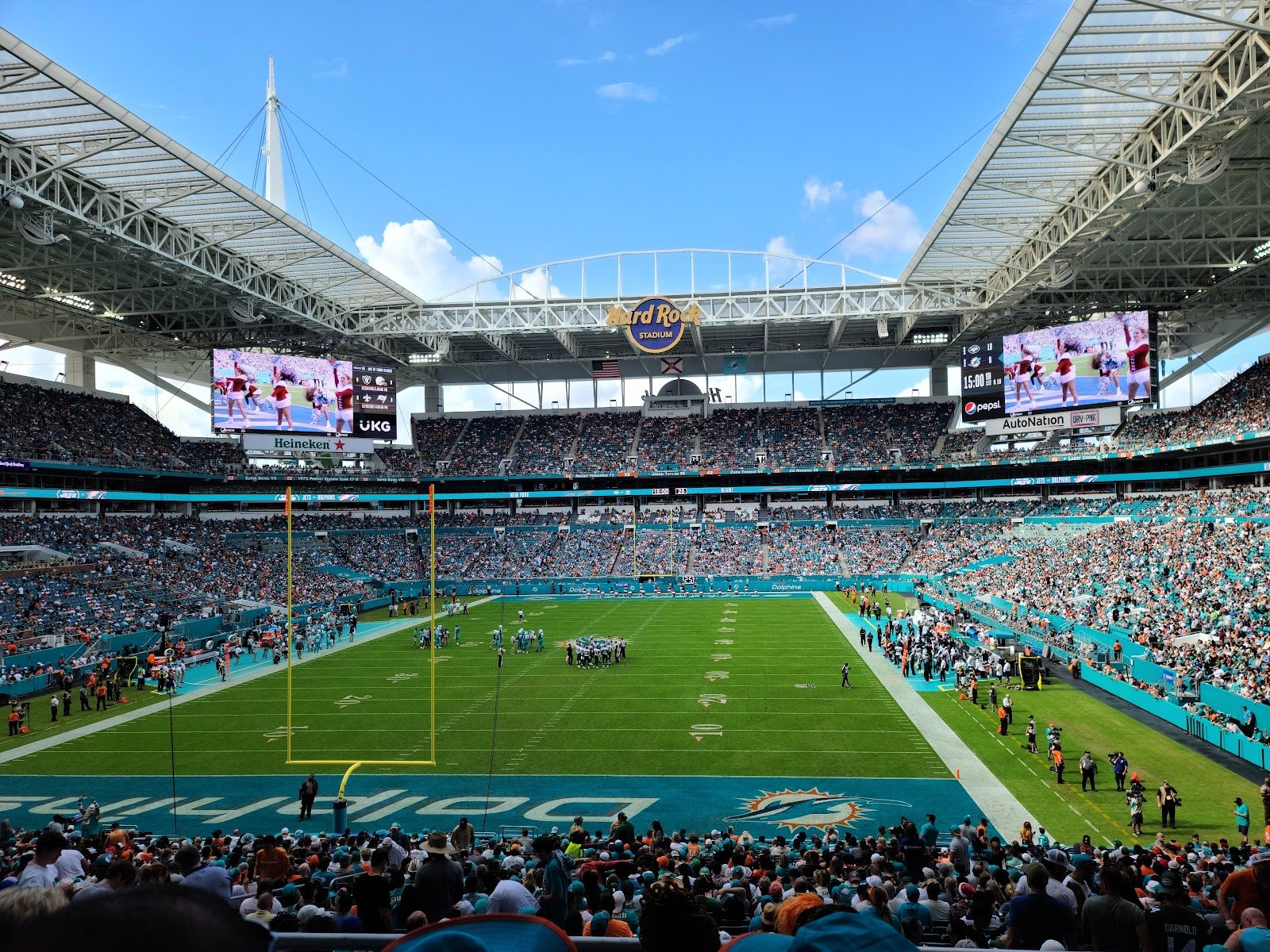
By the second Thursday, the Hard Rock concourses smell like sunscreen and grilled corn, and the line for the practice courts is longer than the line for any stadium match before quarterfinals. That is the tell. The Miami Open is not really a stadium tournament, no matter what the show court suggests — it is a two-week practice complex with a 14,000-seat afterthought attached, and the people who understand that walk in early with a brimmed hat and a refillable bottle and never sit in their assigned section until 8 p.m.
The 2027 edition matters because it is the third year of the post-Key Biscayne format finally settling in. The grounds have learned what they want to be, the surface plays a half-step slower than it did in the awkward 2019 debut, and the late-March slot lands the tournament squarely between Indian Wells fatigue and the European clay swing — which means the draw is deep, the players are honest about wanting to be here, and you get a genuine read on who is going to matter at Roland-Garros. For Floridians, it is also the last big outdoor sporting event before the humidity turns hostile.
What it is
The Miami Open is an ATP and WTA Masters/1000 — the rung directly below the four majors, with mandatory attendance for the top of both tours. It started in 1985 on Key Biscayne under Butch Buchholz, lived through a long run at Crandon Park, and moved to Hard Rock Stadium in Miami Gardens in 2019 after Miami-Dade politics finally made the old site untenable. The current grounds wrap a stadium court inside the football bowl and scatter twenty-something outer courts across the parking lots.
The format is a 96-player singles draw across thirteen days, with doubles, qualifying, and a junior event layered underneath. Every active top-ten player on both tours shows up, give or take a strategic withdrawal from someone managing a clay schedule. The hype-to-substance ratio is real: there is a lot of sponsor activation, a lot of influencer seating, and the early rounds in the football bowl can feel cavernous. The tennis itself, though, is the best concentration of professional play you will see in the United States outside the U.S. Open.
It is expensive. Grounds passes are reasonable; stadium tickets are not, and the resale market for the second week is brutal. Food and drink inside are priced like a Dolphins game, which is to say they are priced like contempt.
When and where
The 2027 edition runs roughly late March 2027, exact dates TBD, across thirteen days at Hard Rock Stadium in Miami Gardens, with qualifying the weekend before the main draw. The footprint is the stadium itself plus the surrounding lots, which means traffic and parking pressure spill into Miami Gardens, Aventura to the east, and the stretch of Northwest 199th around the venue. Brickell and South Beach do not feel the tournament directly, but hotel inventory across Sunny Isles, Aventura, and northern Miami Beach tightens noticeably for the middle weekend.
Getting there
On-site parking exists but is sold in advance and priced accordingly; the lots fill by mid-afternoon on weekend session days. The official shuttle from the Aventura Mall garage is the most underused option locals know about — it runs all session, the garage is free for the first few hours, and you avoid the I-95-to-Turnpike merge entirely. Tri-Rail to a rideshare connection from the Golden Glades or Opa-Locka stations works for the cost-conscious, though the last-mile rideshare surge after night sessions can swing wildly. The official rideshare zone sits on the south side of the stadium; walk one block out to the perimeter road to cut your wait time roughly in half.
Where to eat
The immediate area around Hard Rock is not where you want to eat. Drive fifteen minutes in any direction and the options open up. The Aventura corridor along Biscayne is the easiest pre-match option — kosher delis, Argentine steakhouses, and a dense run of Latin American spots that handle a 5 p.m. rush without flinching. North Miami Beach around the 163rd Street corridor leans Haitian and Peruvian and is meaningfully better than its strip-mall presentation suggests. For after the night session, the Wynwood and Edgewater stretch is roughly forty minutes south but stays open late in a way Miami Gardens does not.
What locals actually do
Locals buy a grounds pass for the first Tuesday or Wednesday, skip the stadium entirely, and camp on the outer courts where you can sit six feet from a top-twenty player hitting with their coach. The practice schedule is posted at the gate every morning and is the single most valuable piece of paper on the property. Second tip: the Grandstand and Butch Buchholz courts are general admission for early rounds, which means the actual tennis-watching experience there outclasses a mid-tier stadium ticket at a quarter of the price.
The other move is to ignore weekend sessions entirely. Thursday and Friday of week two — the round of sixteen — is the sweet spot. The draw has narrowed to people who can actually win, the crowds are manageable, and you can still get a same-day stadium upgrade walking around with a grounds pass after 7 p.m. Bring cash for the upgrade hustle outside the stadium gates; it is not officially sanctioned, but it is real and it works.
If it's your first time
Wear a hat with a brim, not a cap, and bring a refillable bottle — the water stations are plentiful and the sun on the outer courts is unforgiving by 1 p.m. Arrive when the gates open if you have a grounds pass; the best practice viewing is over by noon. Cash, sunscreen, and a portable charger cover the rest.
Where to eat in Miami
Reading a guide is one thing; pairing it with a meal makes the trip. Here are a few hand-picked spots in Miami our editors send people to first.
- Yes Chef 305 — Midtown · Mexican Restaurants · ★ 5.0
- ConSentido Miami — Brickell · Asian Restaurants · ★ 4.8
- Lady Savage Tacos — Wynwood · Mexican Restaurants · ★ 5.0
- Taqueria Las Michoacanas 2 — Little Havana · Mexican Restaurants · ★ 5.0