The Florida State Fair lives in a strange pocket of the calendar: too early for spring break crowds, too late for the holidays, planted in those flat February weeks when Tampa weather finally cooperates and the rest of the country is still scraping windshields. Drive east on I-4 past Orient Road and you can smell it before you see it — funnel cake grease, diesel from the midway generators, and the unmistakable barn-warm note of 4-H livestock barns running at capacity.
The 2027 edition lands at a useful moment. The fairgrounds have spent the last few cycles quietly upgrading the permanent buildings and rerouting the midway away from the dust bowls that used to define the back lots. The result is a fair that feels less chaotic than it did a decade ago without sanding off what makes it worth the drive — the cattle auctions, the rodeo grandstand, and a concert lineup that still leans country in a way Tampa's downtown bookings rarely do.
What it is
The Florida State Fair has been running annually since the 1900s and operates as the state's official agricultural showcase. That framing matters: underneath the carnival paint, this is a working livestock and youth-agriculture event, with serious 4-H and FFA competitions, a horse show, and a commercial agriculture pavilion that draws ranchers from across the state. The midway and the deep-fried Oreos are the front-of-house. The back-of-house is genuinely about Florida's cattle and citrus economy.
Who shows up is split. Weekends pull a heavy regional crowd from Polk, Pasco, and Hillsborough counties — families, teenagers in groups, and a meaningful contingent of agricultural exhibitors and their extended families. Weekdays, especially the opening Tuesday and Wednesday, are notably calmer and worth targeting if you have flexibility.
On hype-to-substance: the headline concerts and signature fried foods get the press, but the actual highlights are quieter. The Cracker Country living-history village in the southwest corner of the grounds is the best thing here that nobody talks about, and the livestock judging arenas are a genuine education if you've never watched a junior heifer show.
When and where
The 2027 fair runs roughly [early to mid February 2027, dates TBD] across 12 consecutive days, following the fair's long-standing early-February tradition. Check the official Florida State Fair Authority schedule before committing to specific dates — opening day and the final Sunday are the two highest-traffic windows.
Everything happens at the Florida State Fairgrounds, just east of Tampa off I-4 at the Orient Road and US-301 interchanges. The closest residential neighborhoods affected are Seffner and Mango to the east and the Six Mile Creek industrial corridor to the south. Downtown Tampa, Ybor, and Seminole Heights feel the spillover mostly through Uber surge and concert-night traffic on I-4 East after 10 p.m.
Getting there
On-site parking exists in volume — the fairgrounds sit on enough acreage that you'll always find a space — but the egress after the grandstand concerts is the worst part of the entire experience. Expect 45 minutes to clear the lot on a Saturday night. Cash is still preferred at the gates, though card readers have improved.
HART runs an express bus from downtown Tampa on peak days, which is the move if you're staying in Channelside or Ybor and don't want to drive. Ride-share pickup is at the designated zone off Orient Road; do not request pickup at the main entrance, your driver will not find you. If you're coming from St. Pete, leave before 4 p.m. or after 8 p.m. to avoid the Howard Frankland and I-4 stacking up simultaneously.
Where to eat
Eat at the fair for the spectacle items — the absurd deep-fried novelties, the smoked turkey legs, the strawberry shortcake from the Plant City strawberry pavilion which is the one fair food worth a second trip. For an actual meal, get back in the car.
Ybor's restaurant row along 7th Avenue is the most logical post-fair stop, fifteen minutes west on I-4. Seminole Heights has the strongest concentration of independent kitchens in the city right now and is worth the detour if you're staying north. For something closer, the Brandon corridor along Causeway Boulevard has solid options and avoids the downtown traffic entirely on weekend nights.
What locals actually do
Locals do not go on Saturday. They go on a Tuesday or Wednesday afternoon, buy the discounted advance-purchase armband at a Publix the week before (the price difference is significant), and skip the headline concert in favor of the rodeo nights, which are consistently better than the grandstand acts and easier to get into.
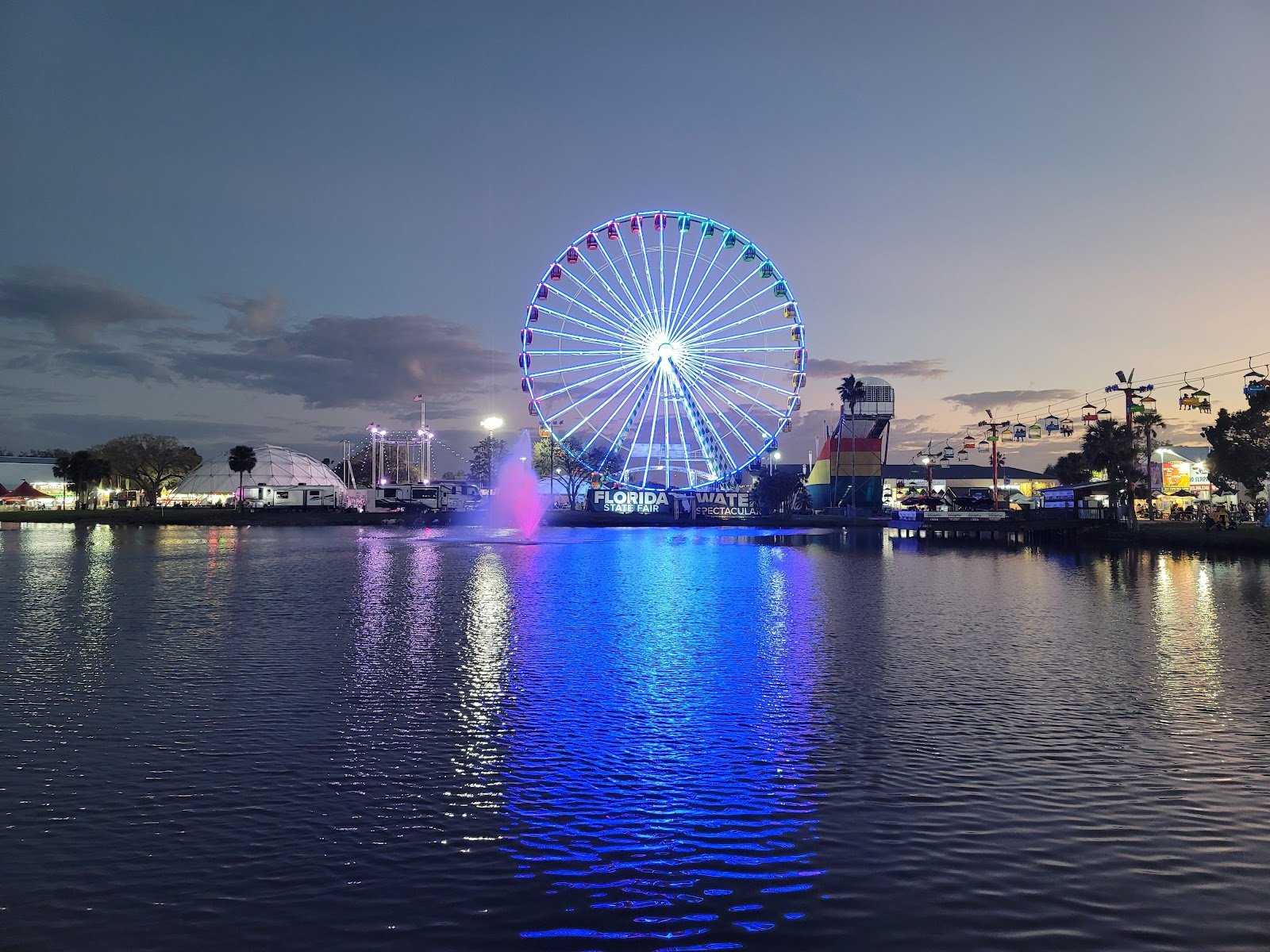
The other local move is to enter through Gate 4 off US-301 rather than the main Orient Road entrance — it's closer to the livestock barns and the Cracker Country side of the grounds, which is where you want to start before the midway gets loud. Save the rides for after dark when the lights are doing the heavy lifting and the temperature has dropped.
If it's your first time
Wear closed-toe shoes you don't care about — the livestock areas are exactly what you'd expect underfoot. Bring cash for the smaller vendors and a refillable water bottle since February in Tampa can still hit the mid-80s. Arrive by 3 p.m. on a weekday, walk the agricultural buildings first, and let the carnival come to you after sunset.
Where to eat in Tampa
Reading a guide is one thing; pairing it with a meal makes the trip. Here are a few hand-picked spots in Tampa our editors send people to first.
- La Terrazza Restaurant — Ybor City · Italian Restaurants · ★ 4.8
- Columbia Restaurant — Ybor City · Latin & Cuban · ★ 4.6
- West Tampa Sandwich Shop — West Tampa · Sandwich & Deli · ★ 4.6
- Cafe Hey — Tampa Heights · Coffee Shops · ★ 4.6