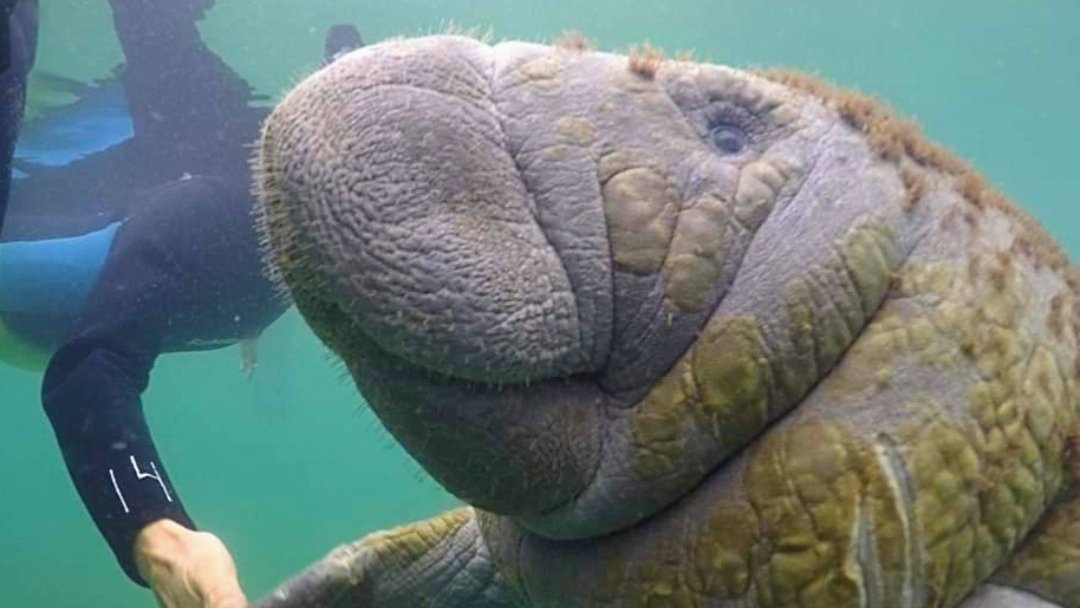
The first sign that something is happening in Crystal River isn't the banners downtown or the tents going up on Citrus Avenue. It's the boat trailers. By the Friday before the festival weekend, every motel lot from US-19 to Kings Bay is stacked with them, and the line for coffee at the marinas starts forming around 5:30 a.m. The manatees have already done their part: by mid-January, the Gulf has cooled enough that several hundred of them have funneled into the 72-degree spring vents at Three Sisters and the surrounding bays, where they will spend the next two months doing very little, very slowly, in water clear enough to read a tide chart through.
The Florida Manatee Festival has been built around this annual gathering since the late 1980s, and the 2027 edition lands at a useful moment. Crystal River has spent the last few years tightening its in-water rules — passive observation zones, smaller tour groups, stricter outfitter licensing — and the festival is the easiest weekend of the year to see how those changes have played out on the water. If you have been on the fence about a swim tour, this is the weekend to book one, because every reputable operator runs at capacity and you can compare notes over beer afterward.
What it is
At its core, the festival is a two-day downtown fair grafted onto a wildlife pilgrimage. The fair half is conventional Florida small-town stuff: an art-and-craft walk along Citrus Avenue, a manatee-themed parade, live music on two stages, a handful of conservation booths run by Save the Manatee Club and the Fish and Wildlife folks. The pilgrimage half is the real draw — chartered pontoon tours into Kings Bay, snorkel trips out of Hunter Springs and Three Sisters, and shuttle service to the Three Sisters Springs boardwalk inside the National Wildlife Refuge.
It is genuinely crowded. The town of roughly 3,500 swells well past its weight class for the weekend, and the in-water tours sell out weeks ahead. The hype-to-substance ratio holds up better than most Florida festivals because the manatees actually show — this is not a manufactured event waiting on a celebrity guest. The downside is price creep: tour rates run noticeably higher than the same operators charge in February or March, and downtown parking turns into a small economy of its own.
Attendees are an even split between Florida day-trippers driving up from Tampa and Orlando, retirees on RV trips, and serious wildlife photographers who treat the weekend as a working assignment.
When and where
The 2027 edition is scheduled for [late January 2027, dates TBD], following the festival's long-standing mid-January slot. The fair grounds run along Citrus Avenue and through Heritage Village Park downtown, with secondary activity at the Plantation on Crystal River resort and at the Three Sisters Springs Center on NW 1st Avenue. The in-water action centers on Kings Bay, with tour boats launching from Hunter Springs Park, Pete's Pier, and the city marina.
The neighborhoods most affected are the downtown core around Citrus and Cypress, the Kings Bay waterfront, and the Paradise Point peninsula, where residents tend to put up polite "no parking" signs the week before.
Getting there
Crystal River sits about 90 minutes north of Tampa on US-19, and the highway is the chokepoint — expect the last 20 miles to crawl from mid-morning onward. The festival runs a free shuttle from satellite lots at the Citrus County Fairgrounds and the Crystal River Mall, which is the only sensible way to handle parking. Downtown lots fill by 9 a.m. on Saturday and stay full. Ride-share coverage is thin this far north of Tampa Bay; treat Uber and Lyft as a "maybe" rather than a plan, and have a backup. There is no passenger rail service to Citrus County.
Where to eat
The food landscape splits into three pockets. The Kings Bay waterfront strip leans into seafood-shack territory — grouper sandwiches, smoked mullet dip, blackened everything — and it is where most tour boats deposit you hungry around 11 a.m. Downtown Citrus Avenue has the densest cluster of sit-down rooms, including a few that have quietly moved past the standard fried-Florida menu into more interesting territory. For breakfast before a sunrise tour, the US-19 corridor north of town is where the marina crowd actually eats, and it is the only stretch reliably open before 6 a.m. Our directory has the current shortlist.
What locals actually do
A few things worth knowing. Locals book the first tour slot of the day, not the 9 a.m. one the festival promotes — the water is calmer, the light is better for photographs, and the manatees haven't been bothered yet by the day's first three boats. They skip the Saturday parade entirely and use that window to get on the water while everyone else is downtown. They also tend to avoid the Three Sisters Springs boardwalk during peak shuttle hours (11 a.m. to 2 p.m.) and walk in from the Hunter Springs side instead, which is a longer approach but rarely backed up.
One more: the conservation booths in Heritage Village are not filler. The Save the Manatee Club staff are the people who can tell you which outfitters have actually changed their practices and which are still running the old script.
If it's your first time
Wear a wetsuit if you are getting in the water — a 3mm rental is fine, and every outfitter has them — because 72 degrees is colder than it sounds after twenty minutes of floating. Bring polarized sunglasses for the boardwalk; without them you will miss half of what is under the surface. Arrive Friday night if you can, and be at your tour dock by 6:30 a.m. Saturday. The festival will still be there when you get back.