Florida has 1,350 miles of tidal shoreline — more than any state except Alaska — and most visitors end up at the same ten beaches every time. That says more about the power of search rankings than it does about the actual geography. The two coasts run parallel to each other for most of the state's length, but they are not the same ocean, not the same culture, and not the same experience.
The Atlantic side is cooler, more dynamic, and more lived-in. Its waves are real waves. Its towns carry the slightly worn-in quality of places that exist for people who actually live there, not just for people passing through. The Gulf is warmer, calmer, and in the right light, genuinely otherworldly — the quartz-sand beaches of the Panhandle and the turquoise shelf water off Siesta Key look like something from a geography textbook on tropical coasts. The Keys belong to a different category altogether: less swimming destination than wading-in-a-lagoon experience, with reef-adjacent clarity that neither coast matches.
What follows covers the beaches that define their respective regions — not the ones with the most reviews, but the ones locals cite when they are actually deciding where to spend a Saturday. Each section includes a note on best use case and the timing approach that keeps parking lots emptier than the headlines suggest.
Northeast Atlantic: Amelia Island and the Nassau County Coast
The northernmost Atlantic beaches carry a different character than the rest of Florida. Amelia Island sits just south of the Georgia line and feels like the Sea Islands extended — wide, relatively empty strands backed by maritime forest and salt marsh. The hard-packed sand supports vehicles in designated areas, and Fernandina Beach's historic district is a short walk from the surf. Best for families and couples who want a beach that doubles as a town. The shoulder months — late September through early November — are when locals go.
Anastasia State Park near St. Augustine is the more disciplined choice: no commercial development, just four miles of Atlantic coast backed by dunes and scrub. The park limits entry by vehicle count, which means it actually stays quiet. Vilano Beach, just north of St. Augustine, remains one of the more underused Atlantic beaches in the state — wide, uncrowded even in summer, with a small surf break worth knowing. Jacksonville Beach is the working-class counterweight: less picturesque, more consistent, and frequented by people who come here every weekend rather than once a year.
Central Atlantic: The Surf Coast from Daytona to New Smyrna
Daytona Beach is the most misunderstood beach in Florida. Strip away the Bike Week mythology and you have a hard-packed, wide beach with reliable swell and a boardwalk that is more workaday than tacky. Cocoa Beach is the more polished version — closer to Orlando, with a surf culture that dates back to the Apollo-era astronauts who paddled out between launches. For actual surfing, New Smyrna Beach is the serious choice. It consistently produces the best breaks on Florida's Atlantic coast, supports a committed surf community, and the compact downtown is walkable enough to sustain a full day. October through February delivers the most consistent swell and the thinnest crowds.
Southeast Atlantic: Miami to Jupiter
South Beach is genuinely worth the crowds — once. The Art Deco backdrop, the warm water, and the people-watching infrastructure are all real. But it is a destination experience, not a regular-Saturday experience. For that, Hollywood Beach serves Miami's working residents better: less famous, equally warm, with a Broadwalk that feels like it belongs to the neighborhood. Delray Beach occupies the sweet spot between Palm Beach money and Boca sprawl — a proper walkable downtown adjacent to an Atlantic beach that does not require a valet. The public beaches at midtown Palm Beach are well-maintained and far less crowded than Miami equivalents, despite the town's reputation for exclusivity. Jupiter closes this stretch with a more natural character — inlet, lighthouse, rocky formations — that draws snorkelers and fishing regulars alongside the usual crowd.
Gulf Coast — Tampa Bay: Pinellas County's Western Shore
Clearwater Beach earns its reputation: the water temperature, the sand color, and the west-facing orientation combine for a reliable Gulf experience. It is also reliably crowded from March through August. The local solution is Caladesi Island State Park, accessible only by ferry or kayak, which stays functionally quiet even in peak months. Honeymoon Island State Park serves as the ferry departure point for Caladesi and is worth an afternoon on its own. St. Pete Beach is the more laid-back counterpart to Clearwater — the sand is identical, the crowds slightly thinner, and the strip of hotels feels more mid-century Florida than contemporary resort.
Gulf Coast — Sarasota to Naples: The Siesta Key Corridor
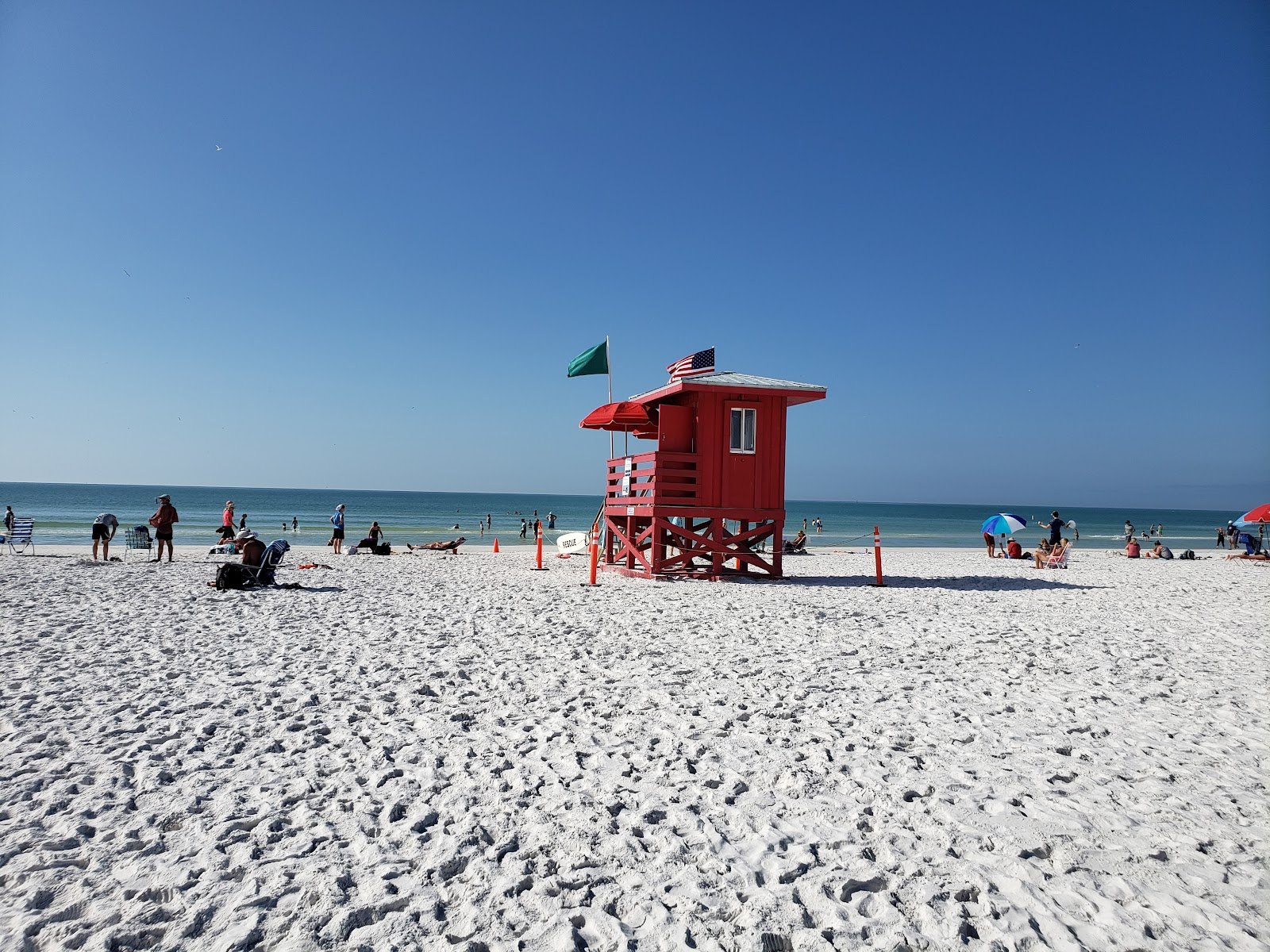
Siesta Key consistently ranks among the top beaches in the country by quartz-sand purity, and the ranking is accurate — the sand stays cool to the touch even in July. The public beach is well-organized and genuinely accessible. Lido Key in Sarasota is the quieter neighbor: a barrier island city beach that draws a local crowd and benefits from proximity to the Ringling museum complex. Further south, Vanderbilt Beach in Naples is where Collier County residents actually go — less developed than downtown Naples, less visited than Siesta Key. Marco Island closes the southwest corridor with a Gulf beach that is more built-up than most but still delivers the warm, calm water that makes this coastline distinct from anything on the Atlantic side.
Panhandle: The Emerald Coast and 30A
The Panhandle operates on Central Time and a different cultural logic. The 30A corridor — the coastal highway connecting Seaside, Watercolor, Rosemary Beach, and a dozen smaller communities — is the most deliberately designed beach landscape in Florida. Seaside is where The Truman Show was filmed, and standing in its town center makes the film's premise legible. The beaches along 30A are legitimately extraordinary: white quartz, steep dunes, water that shifts from green to turquoise by afternoon. The towns are expensive and architecturally precious, but the beach access points are public. Pensacola Beach is the unpretentious counterpoint — Naval Air Station culture, wide open strand, and crowds that thin dramatically after Labor Day. Destin sits between those two poles: full resort infrastructure, serious fishing heritage, and Gulf water that ranks among the clearest in the state.
The Keys: Calmer Water, Different Expectations
Keys beaches are neither Gulf Coast nor Atlantic. They are shallow-water, reef-adjacent, clear-water experiences where swimming and snorkeling overlap. Bahia Honda State Park — specifically its Sandspur Beach — is the most reliably praised natural beach in the Keys: narrow, framed by a historic bridge structure, and facing water clear enough to see the bottom at ten feet. Sombrero Beach in Marathon is the Keys' best free public beach — wide, calm, with a grassy park behind it that draws families who want space as much as sand. These are not surfing beaches. They are places to get into warm, clear water and stay there.
When to Go
Florida's beach season is effectively inverted by coast. The Gulf's prime window runs October through April — dry season, lower humidity, warm water without the daily 3 p.m. thunderstorms that define summer. The Atlantic coast is more forgiving year-round, with cooler winter water but consistent conditions for surfing and swimming. Spring break, mid-March through mid-April, saturates every well-known beach in the state; locals avoid the most-photographed stretches entirely during this window and return after Easter. Hurricane season runs June through November, with August and September carrying the highest statistical risk. The practical rule on any Florida beach: arrive before 10 a.m. or after 3 p.m., check posted flag conditions before entering the water — red and purple flags are not suggestions — and give right-of-way to nesting shorebird areas marked with rope and stakes, which appear on Gulf beaches from April through August.