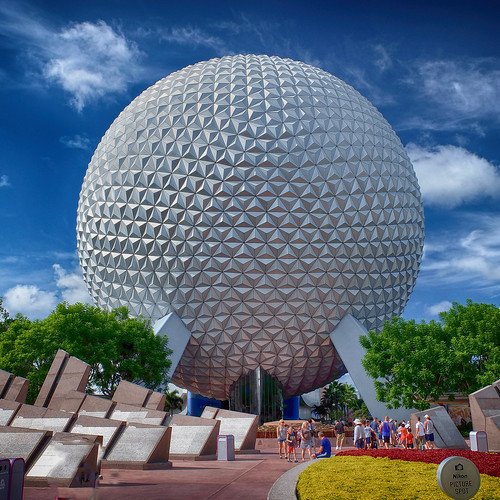
The first sign Food & Wine season has arrived at EPCOT isn't a banner or a press release — it's the smell of grilled lamb drifting from the Australia booth somewhere near the bridge between Mexico and Norway, hitting you before you've even cleared the tap-stiles. Annual passholders who haven't bothered with the park since spring suddenly remember they have a membership. The lagoon path gets a little slower, the conversations get a little louder, and the bag check line at the International Gateway swells with people carrying empty tote bags they intend to fill with sauvignon blanc.
This is Disney's longest-running festival and, by a wide margin, its most food-forward. The 2026 edition keeps the format that has worked since the late nineties — roughly thirty global marketplaces ringing World Showcase, small plates priced for grazing, and the Eat to the Beat concert series anchoring the America Gardens Theatre most evenings. What changes year to year is the lineup of countries, the chef collaborations, and the rotating cast of bands trying to remind you they had a hit in 2007. The core appeal stays the same: an excuse to drink Riesling in the morning and call it cultural enrichment.
What it is
The EPCOT International Food & Wine Festival debuted in 1996 as a six-week experiment and never really left. It now runs close to three months, making it the longest event on the Disney calendar and, functionally, a second operating season for the park. The format is straightforward: temporary kiosks — called marketplaces — pop up between and around the existing World Showcase pavilions, each themed to a country or region. You buy small plates and pours individually, usually in the seven-to-twelve dollar range per item, and you walk.
The crowd skews older and more local than a typical Disney day. You'll see Florida annual passholders in matching Festival t-shirts, conference attendees from the convention hotels, and a steady contingent of foodie tourists who built their whole trip around it. It is expensive in the way grazing always is — three plates and two drinks per person and you've cleared a hundred dollars before you've tried anything from France. The hype-to-substance ratio is genuinely fair. Some booths phone it in. Others — usually the Hawaii, New Zealand, and Belgium standbys — earn their reputations.
Weekends in October are the festival at its most punishing. Weekday mornings in September are when it feels like a secret.
When and where
The 2026 festival runs from [late August 2026, exact dates TBD] through [mid-November 2026, exact dates TBD]. Disney typically announces the booth lineup and Eat to the Beat schedule about six to eight weeks before opening; check the official EPCOT site closer to summer for confirmed dates and the marketplace map.
Everything happens inside EPCOT, specifically along the World Showcase promenade — the 1.2-mile loop around the lagoon. The Future World side of the park stays mostly festival-free aside from a handful of dessert and beverage stops near the entrance. The ripple effects extend well beyond the gates: traffic on World Drive backs up earlier than usual, the Disney Skyliner lines at International Gateway get genuinely rough between five and seven, and the Crescent Lake hotels run at festival pricing through the entire window.
Getting there
Driving in is straightforward but slow. EPCOT parking runs thirty dollars for standard, and the toll plaza on World Drive starts choking around eleven on weekends. If you're staying anywhere on Disney property, the buses and Skyliner are faster than your own car most days — the Skyliner from the Caribbean Beach hub drops you at International Gateway, which puts you closer to the food booths than the main entrance does.
Rideshare is the underrated play. Uber and Lyft pickups use the Walt Disney World Dolphin or the Swan if you tell the driver to drop at the Boardwalk area, then it's a ten-minute walk to International Gateway and you've skipped the entire parking trolley loop. For groups, Minnie Vans through the Lyft app drop you closer but cost three times as much.
Where to eat
The festival is the meal, but Orlando's actual food scene is worth the detour on either side of a park day. The Mills 50 district just east of downtown — the Vietnamese-American corridor along Mills Avenue — runs circles around anything inside the park gates and stays open late enough for a post-festival second dinner. Winter Park's Hannibal Square is the move for a slower brunch the morning before, fifteen minutes north and entirely insulated from theme-park energy. For something closer, the Dr. Phillips restaurant row along Sand Lake Road — locally called Restaurant Row — sits ten minutes from the EPCOT exits and handles the post-park steak-and-cocktail crowd. We keep a running list in our Orlando directory.
What locals actually do
Locals do not go on Saturdays. They go on a Tuesday in early September, arrive at park opening, hit four or five booths in the first ninety minutes before the lunch crowd lands, and leave by two. Annual passholders use the dedicated AP lounge for the bathroom break and free bottle of water, which is worth more than the merchandise discount most days.
The other local trick: the festival is a drinking event masquerading as a food event, and the wine seminars and beverage seminars — the ticketed ones held off the promenade in the Festival Center — are where you actually learn something and sit down. The Eat to the Beat concerts are free with park admission, but the Dining Package that bundles a sit-down restaurant with reserved concert seating is the only reliable way to avoid standing for two hours. Skip the headliner Saturdays. Go on a Monday when a band you've half-forgotten plays to a friendly half-empty theater.
If it's your first time
Wear real shoes — the promenade is concrete and you'll walk five miles before you notice. Bring a refillable water bottle and use the drinking fountains between booths to pace yourself; the small pours add up faster than people expect. Arrive at park opening, eat your way counterclockwise starting from Canada, and be out before the four o'clock surge.
Where to eat in Orlando
Reading a guide is one thing; pairing it with a meal makes the trip. Here are a few hand-picked spots in Orlando our editors send people to first.
- Kadence — Audubon Park · Sushi & Japanese · ★ 4.7
- 4 Rivers Smokehouse — Winter Park · BBQ · ★ 4.6
- Black Rooster Taqueria — Mills 50 · Mexican Restaurants · ★ 4.6
- Domu — Mills 50 · Asian Restaurants · ★ 4.5