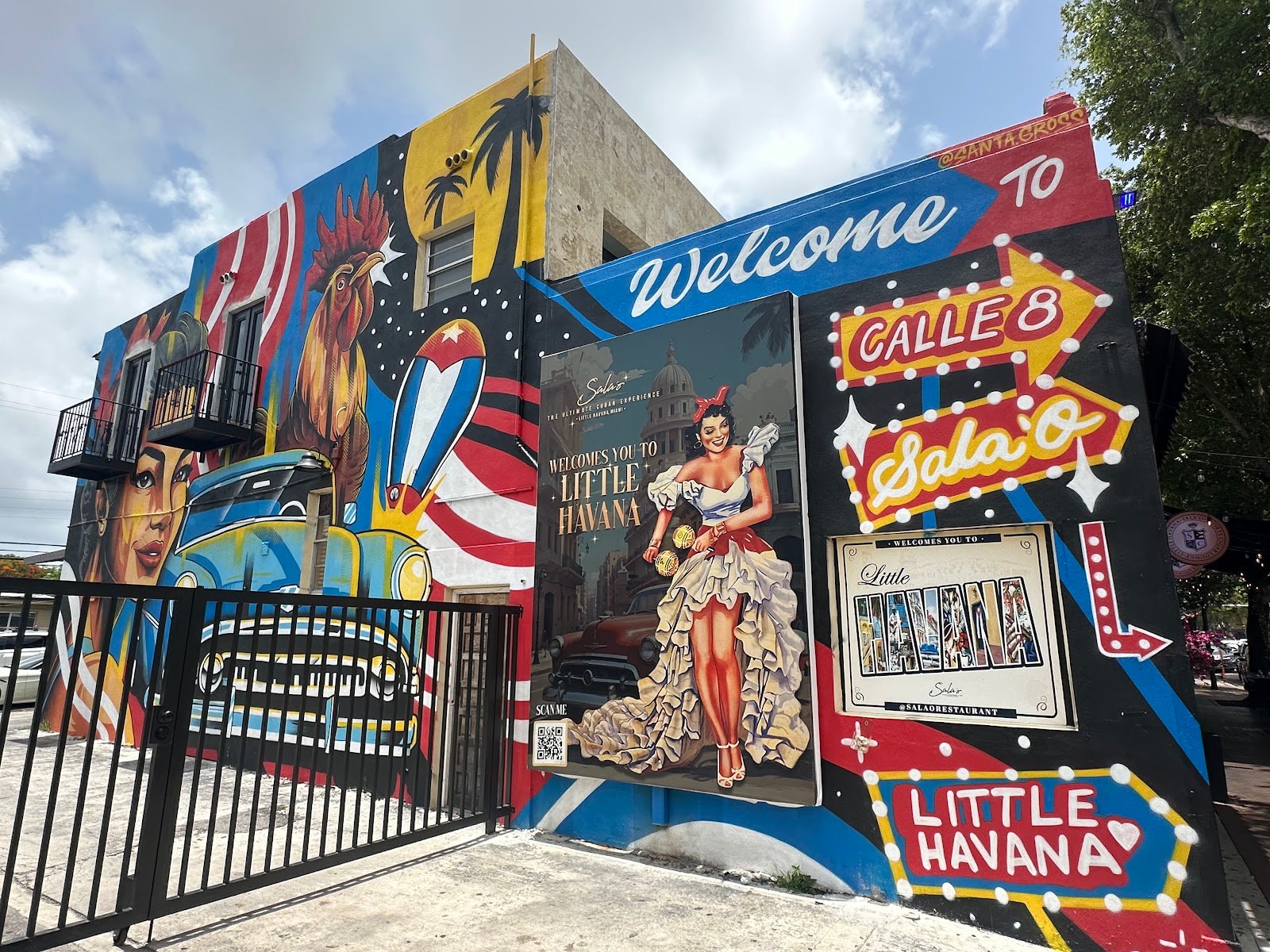
By the time the sound check finishes on Southwest Eighth Street, the smell of lechon has already worked its way three blocks north into the residential grid of Little Havana. That is the tell. Calle Ocho is not a festival that announces itself with banners — it announces itself with smoke, with the low thud of a tumbadora being tuned at ten in the morning, with abuelas claiming plastic chairs near the corner of 17th Avenue six hours before anything is technically scheduled to begin. The official map covers a mile. The actual footprint is the entire neighborhood, and that is the part the brochures get wrong.
The 2027 edition lands in what feels like a transitional moment for the festival. The crowds have rebounded past pre-2020 levels, the stage lineups are leaning younger and more reggaeton-heavy than the old guard prefers, and the food vendor lottery has quietly favored second-generation Cuban-American operators over the legacy stalls. If you have been coming for years, expect a different texture. If you have never been, this is a reasonable year to start.
What it is
Calle Ocho is the closing Sunday of Carnaval Miami, a multi-week run of events organized by the Kiwanis Club of Little Havana that has been going since the late 1970s. It began as a block party meant to celebrate the Cuban exile community's presence in the neighborhood and grew, over four decades, into the largest Latin street festival in the country. The format is simple: roughly a mile of Eighth Street closes to traffic, a dozen-plus stages go up at intersections, and several hundred food and craft vendors line the curbs.
Who shows up is more interesting than the numbers suggest. The morning belongs to families and the older neighborhood crowd — domino tables set up on side streets, the Walk of Fame stars getting their annual scrub, abuelos in guayaberas holding court near the cigar shops. The afternoon flips. By two o'clock the demographic skews twenty-five to forty, the crowd density makes the central stretch a slow shuffle, and the headline stages start pulling regional Latin acts that draw fans from across South Florida.
Be honest with yourself about the trade. The hype-to-substance ratio is real. Drink prices on Eighth itself run high, the lines for the marquee food stalls are punishing, and the central blocks between 12th and 17th Avenues are not where the festival is actually good. The edges are where it earns its reputation.
When and where
The 2027 edition is scheduled for the second Sunday in March [exact date TBD pending the Carnaval Miami calendar release]. Programming typically runs from late morning into the early evening, with the official close around seven, though the side-street parties run later.
The route covers Southwest Eighth Street from roughly 27th Avenue east to 4th Avenue, anchored in the heart of Little Havana. Closures affect the surrounding residential blocks north toward West Flagler and south toward Coral Way, and traffic on the major north-south arteries — 17th, 22nd, and 27th Avenues — backs up well into the adjacent neighborhoods of Shenandoah and Flagami.
Getting there
Do not drive into Little Havana. The parking situation is hostile by design — most surface lots within a half-mile radius go to permit-only or jack rates to triple digits by mid-morning, and street parking enforcement is aggressive. The smarter move is to park near a Metrorail station — Brickell, Vizcaya, or Culmer all work — and walk or grab a short ride-share from there.
Ride-share is workable if you commit to the designated drop zones along 27th Avenue or near 4th Avenue and SW 8th, but expect surge pricing and a quarter-mile walk regardless. The free trolley routes from downtown and Brickell run extended service on festival day and are genuinely the best option if your timing is flexible.
Where to eat
The festival food is the festival food — pork sandwiches, croquetas, churros, the standard expanded canon. It is fine. The better play is to anchor your day with a real meal off the route. The stretch of Calle Ocho west of 27th Avenue stays open and has the older, family-run Cuban kitchens that locals default to when the central blocks get unbearable. East of the festival footprint, the Brickell side draws a younger crowd with newer Latin-fusion rooms that take walk-ins better on Sunday afternoons.
If you want something other than Cuban, the Coral Way corridor south of the festival is solid for Argentine and Peruvian, and a short drive north to the Allapattah warehouse district has been quietly building a serious food scene that mostly empties out on Calle Ocho day — which is the point.
What locals actually do
The central blocks are a tourist tax. Locals stake out the stages between 22nd and 27th Avenue, where the booking tends to favor traditional son and timba acts over the pop headliners, and the crowd density is roughly half. The domino tables on the side streets off 15th Avenue are where the actual neighborhood gathers, and nobody minds if you sit and watch.
Two other things worth knowing. The satellite events earlier in Carnaval Miami week — the Domino Tournament, the cooking competitions, the night at the Tower Theater — are where the community shows up without the tourist overlay, and they are mostly free. And the after-party scene migrates to Ball & Chain and the bars along the eastern stretch of Eighth around eight o'clock, which is when the festival proper thins out and the music gets better.
If it's your first time
Arrive by eleven, leave by four if crowds are not your thing, or commit to staying past six when the central blocks clear out and the energy resets. Wear shoes you can stand in for six hours, bring cash for the vendors who still prefer it, and skip the wristband upsells — the free stages are the good ones. Hydrate before you start drinking, because the sun on Eighth Street in March is more aggressive than it looks.
Where to eat in Miami
Reading a guide is one thing; pairing it with a meal makes the trip. Here are a few hand-picked spots in Miami our editors send people to first.
- Yes Chef 305 — Midtown · Mexican Restaurants · ★ 5.0
- ConSentido Miami — Brickell · Asian Restaurants · ★ 4.8
- Lady Savage Tacos — Wynwood · Mexican Restaurants · ★ 5.0
- Taqueria Las Michoacanas 2 — Little Havana · Mexican Restaurants · ★ 5.0